
October has been a month of big feelings and beautiful moments in Nido. As our little ones feel more and more at home, something wonderful has started to unfold. They are discovering each other and, as it turns out, discovering each other and learning to manage big emotions go hand in hand. Here’s a glimpse of what I’ve been seeing.
From “Me” to “We”
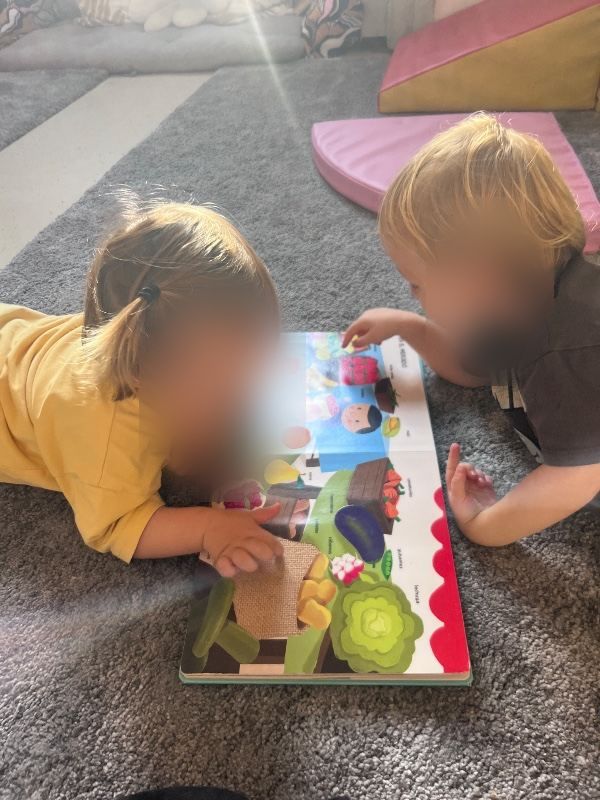
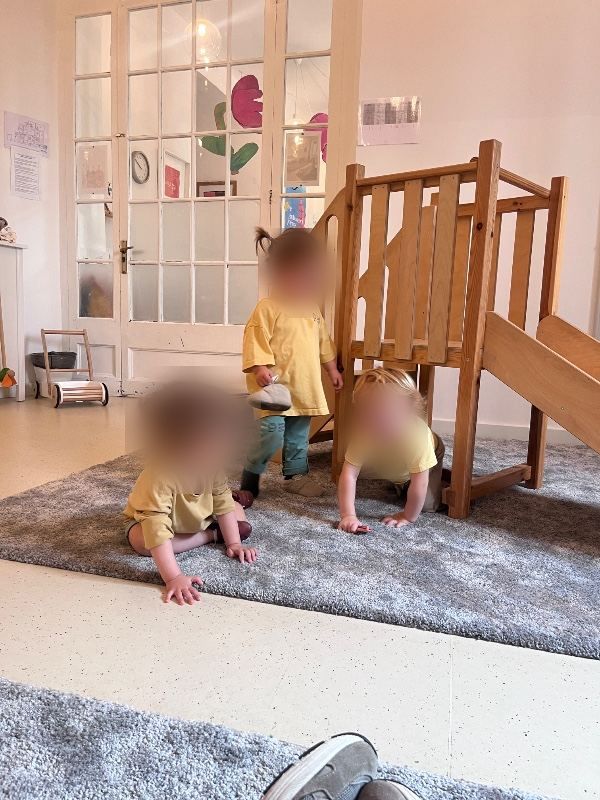
At this age, social play begins side by side. Children first play next to each other, watching and learning, and little by little they begin to play with each other. This month I’ve seen it everywhere: two children passing objects back and forth around the wooden slide and laughing together, one little one showing a friend how the ball tracker works, a child who sees her friends at the food prep table and decides to join them, picking up her own tray. These small moments are where friendship and empathy quietly begin.
When Conflicts Appear
Here is something that might surprise you: “conflict is a good sign.” As children feel safe and comfortable, more of who they are comes out, including “mine!”, not wanting to share, frustration, and sometimes very loud crying. It can feel challenging at home, but it tells us they trust their environment enough to be themselves. At 1 to 2 years old, they are not being “difficult”, they have big feelings and very few tools to manage them yet. Self-regulation is not something children are born with. It is learned through experience, and mostly through us, by borrowing our calm until they develop their own.
How We Support Them in Nido
- We name the feeling. “You’re angry, you wanted that one.” Feeling understood is often the first step toward calming down.
- We stay calm and keep our voice low. Our calm becomes their model.
- We don’t force sharing. At this age, “mine” is part of understanding what belongs to them. We acknowledge it, wait, and let turn-taking grow naturally.
- We offer alternatives. A word, a gesture, or another material, so they have tools beyond crying or screaming.
- We observe before stepping in. Often, given a little time and space, they find their own solution.
- We offer closeness without rushing to fix. Our presence is what helps them settle.
Tips for Home
A few simple ideas that make a big difference:
- Put words to feelings throughout the day, in short, clear sentences: “You’re sad,” “You’re excited,” “You’re frustrated.”
- Stay calm first. Take a breath before responding. Your calm is the strongest tool you have.
- Set clear and kind limits. “I won’t let you hit. You can stomp your feet instead.” Firm and warm at the same time.
- Give them a chance to try before stepping in on small conflicts with siblings or friends. A few seconds of patience can show you how capable they are.
- Celebrate the calm moments: “You were upset, and you stayed calm.”
- Keep routines predictable. Knowing what comes next helps them feel safe, and a safe child regulates more easily.
My Recommendation
A book and a podcast. If you’d like to read or listen more about this stage, I recommend Janet Lansbury’s book No Bad Kids: Toddler Discipline Without Shame, a warm, practical guide to setting limits with respect and empathy. Easy to read, clear, with great examples that are easy to put into practice. If you don’t have time for a book, listen to her podcast Unruffled, which is full of real-life situations with toddlers, including sharing, tantrums, and big emotions.