Maria Montessori,
the doctor who listened to children.
The story of her life and her big ideas — written for grown-ups and children to read side by side, one chapter at a time.
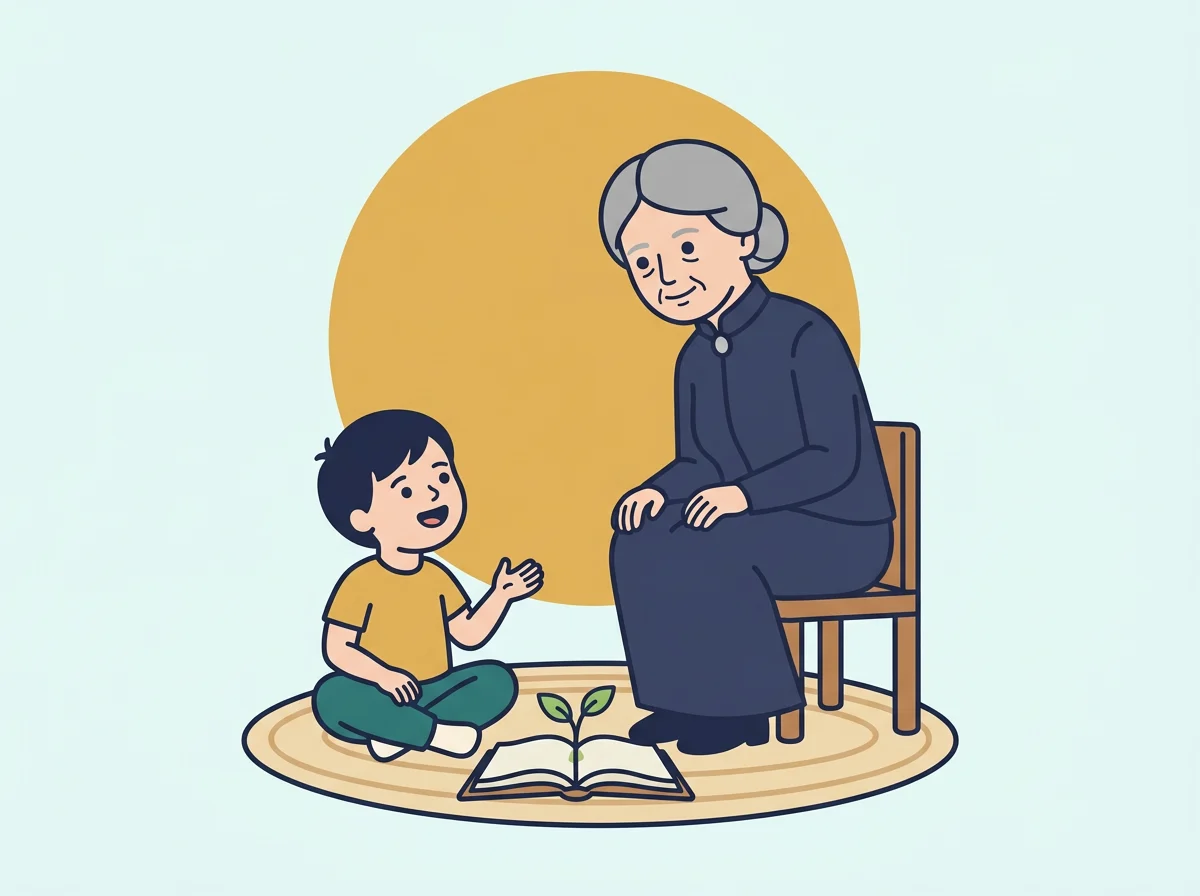
Snuggle up together. Read one or two chapters at a time. When you reach the questions, stop and listen to your child’s answers — there are no wrong ones. Maria would have done exactly the same: she always listened to children first.
A curious girl
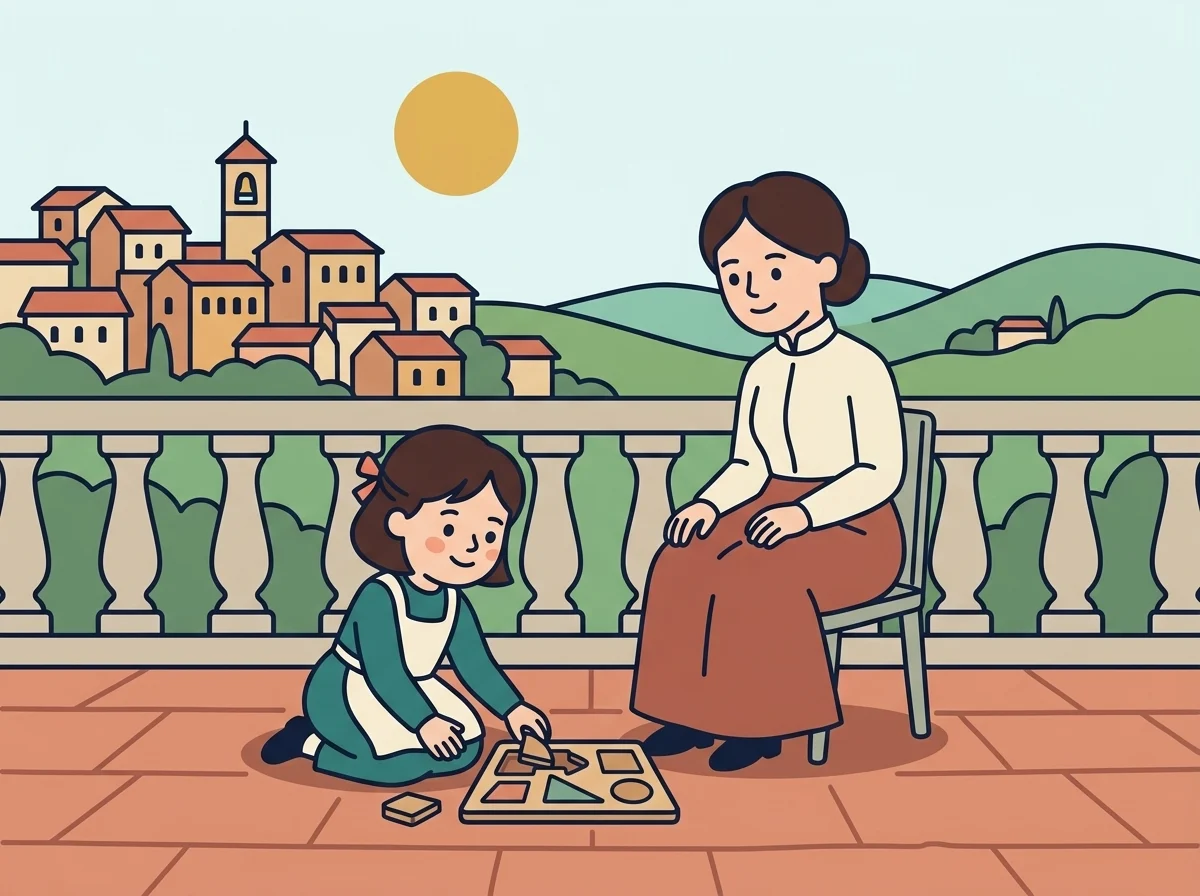
Once upon a time, on the 31st of August 1870, a baby girl was born in a small town in Italy called Chiaravalle. Her parents named her Maria.
When Maria was still little, her family moved to Rome, a big city full of old stones, splashing fountains and long, long stories.
Maria was curious about everything. She loved numbers and puzzles, and she always wanted to find out how things worked. Her mother, Renilde, taught her to be kind and to care for other people — and Maria never forgot it.
Let’s talk together
What are you curious about?
Is there something you would love to find out how it works?
A big dream
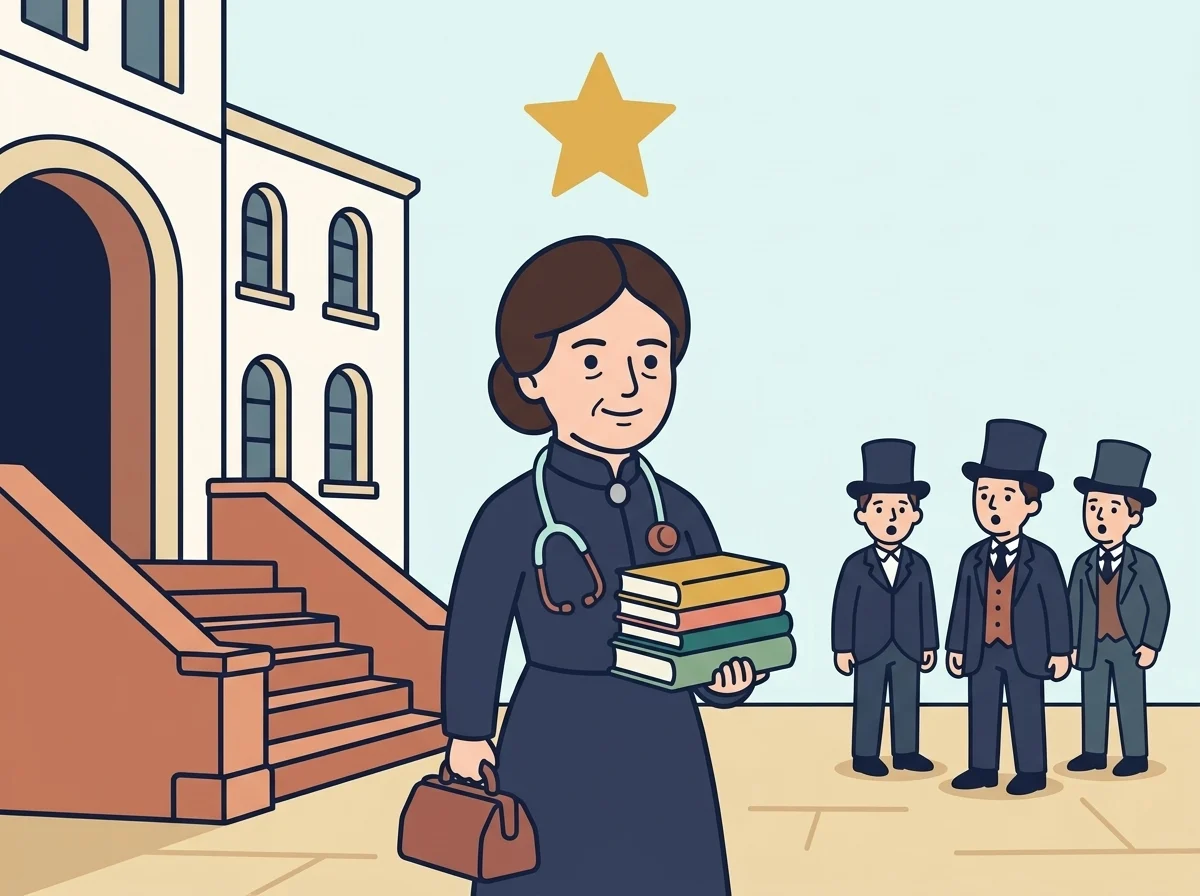
In those days, many people thought that girls should not study science. Maria did not agree!
She went to a school where almost all the pupils were boys, and she studied maths and science. Then she decided on a very big dream: she wanted to become a doctor.
“A girl cannot be a doctor!” some people said. But Maria was patient and brave, and she kept on working. In 1896 she became one of the very first women doctors in Italy.
Let’s talk together
Has anyone ever told you that you couldn’t do something?
What did you do? What could you do next time?
Hands that want to learn
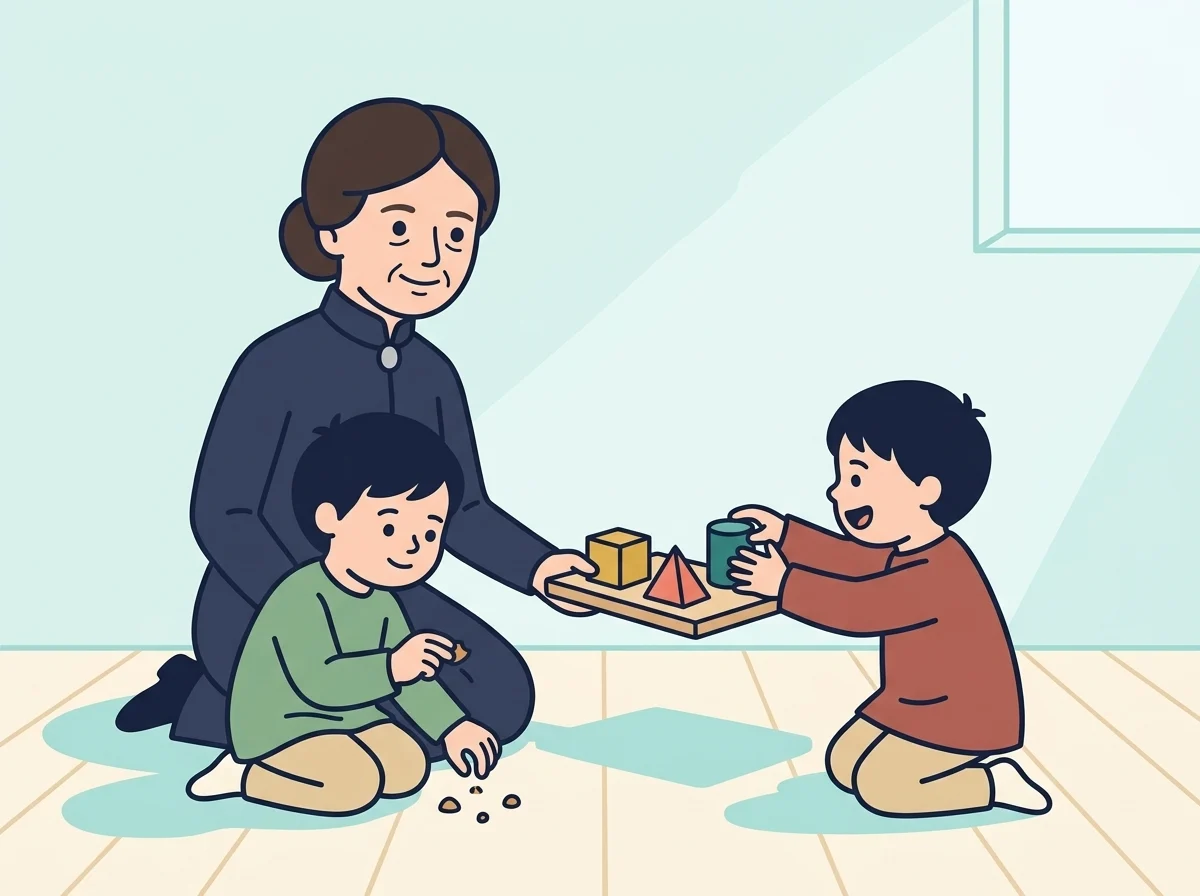
As a young doctor, Maria worked with children who needed extra help. Many of them spent their days in bare rooms, with nothing to play with or to touch.
One day Maria saw the children picking up breadcrumbs from the floor and turning them over and over in their fingers. “They are not hungry for bread,” she thought. “They are hungry to learn! Their hands want something to do.”
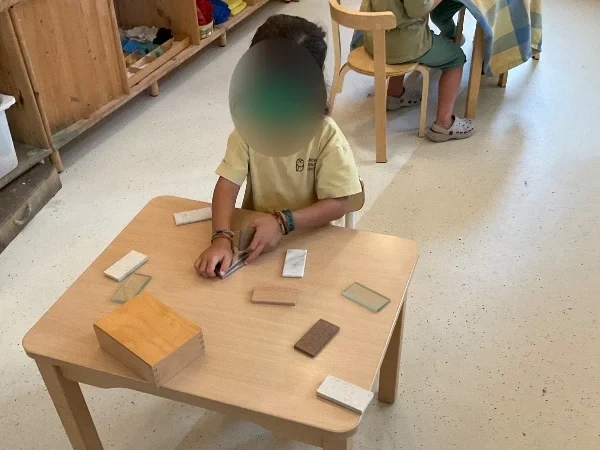
So Maria made special materials for them to hold, sort, fit together and build with. And the children learned much more than anyone had expected.
Let’s talk together
What do you love to make or build with your hands?
Why do you think our hands help us to learn?
The Children’s House
On the 6th of January 1907, in a poor neighbourhood of Rome called San Lorenzo, Maria opened a school for little children whose parents went out to work all day. She called it the Casa dei Bambini — the Children’s House.
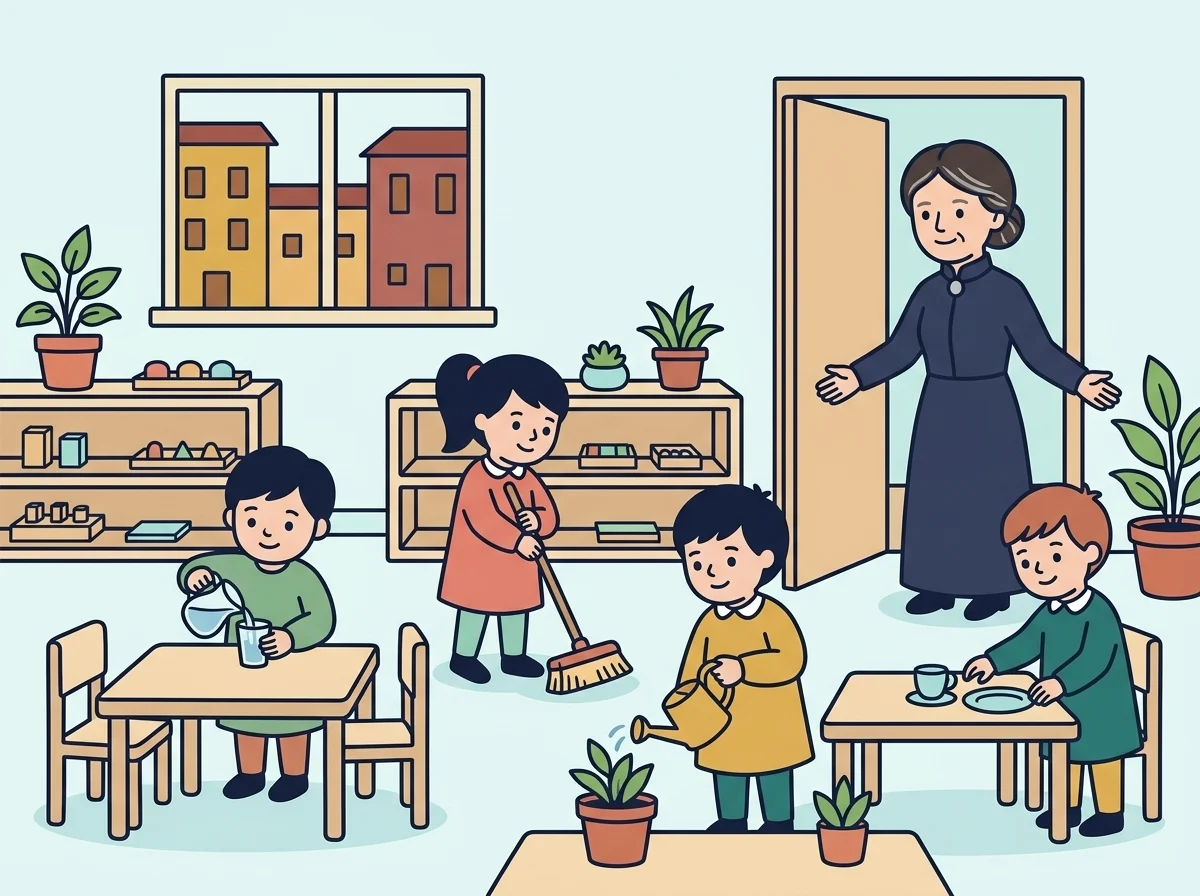
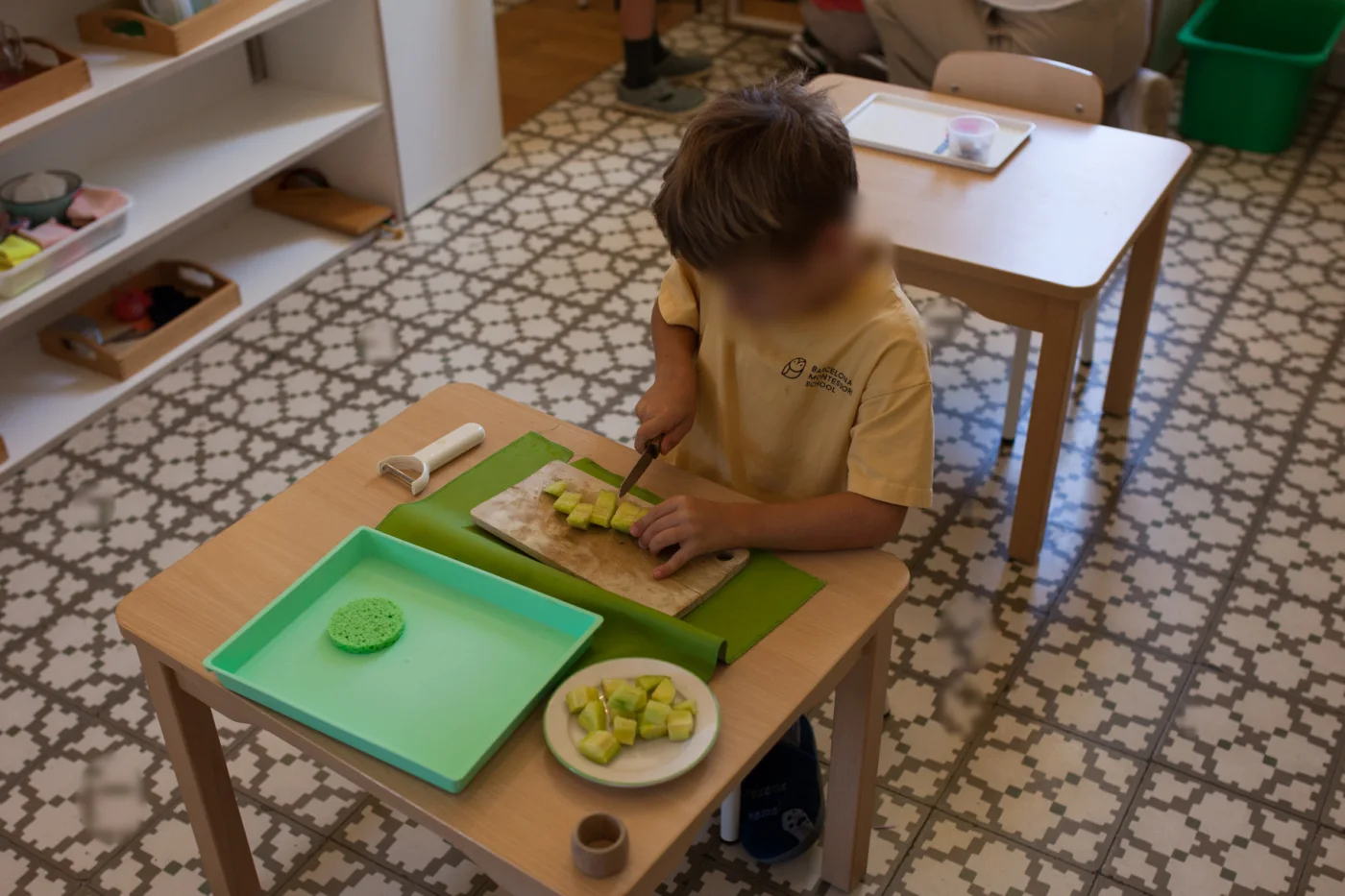
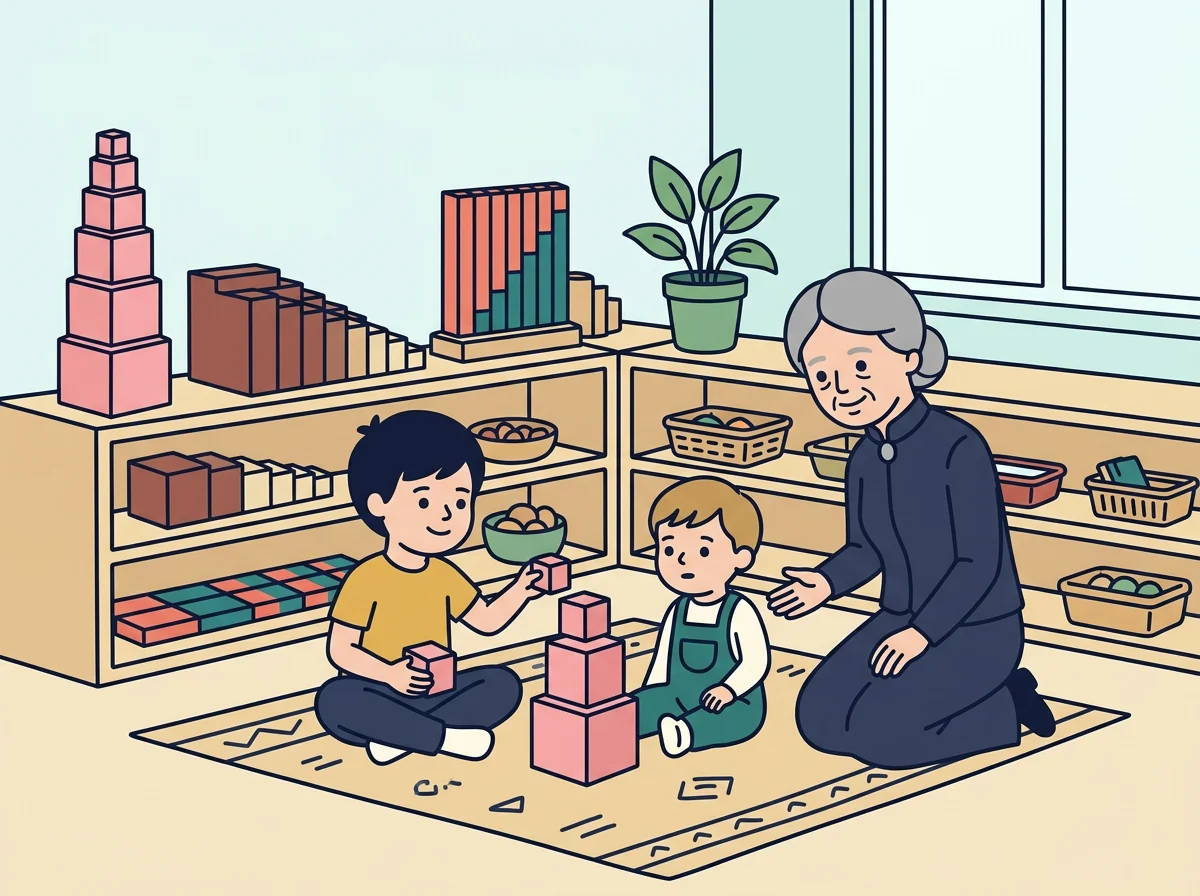
Maria filled it with small tables and chairs that children could carry by themselves, low shelves, real little jugs and child-sized brooms. The children could pour water, sweep the floor, water the plants, set the table and choose their own work.
“This house is yours,” Maria told them. And the children looked after it with great care and great pride.
Let’s talk together
Which jobs can you do all by yourself at home?
Which new job would you like to learn?
The girl who would not stop
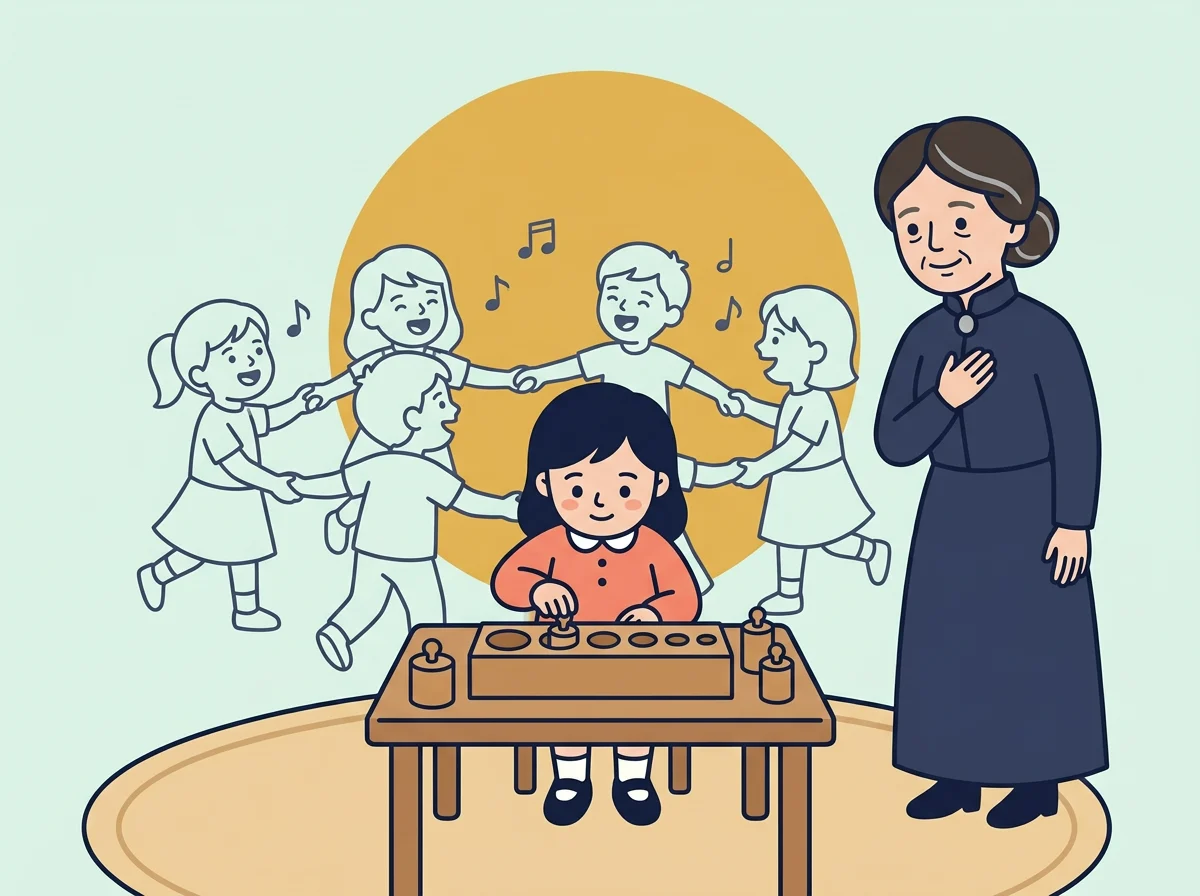
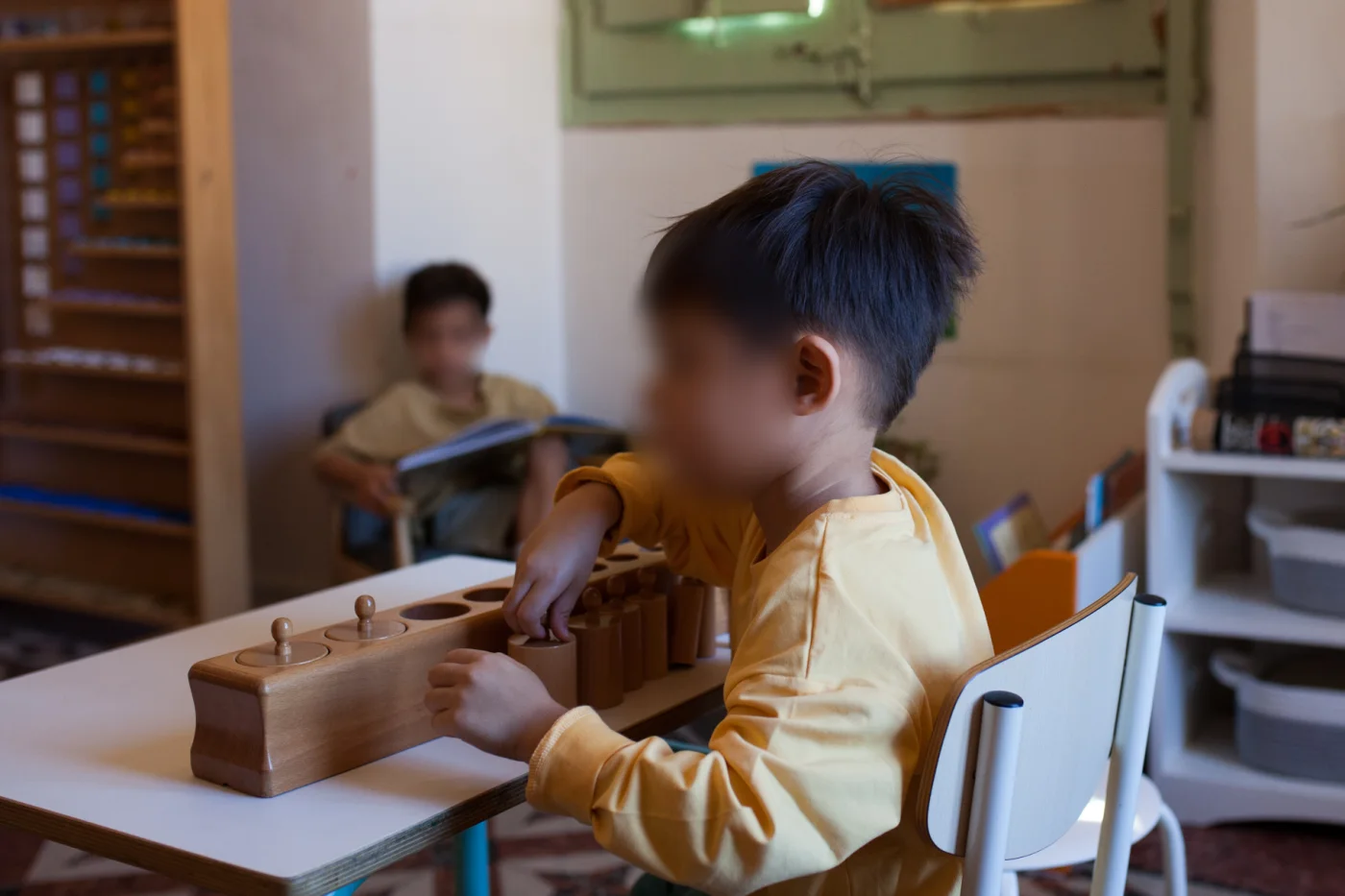
One day Maria watched a little girl, about three years old, working with a wooden block full of cylinders. She took them all out and put each one back into its very own hole. Then she did it again. And again!
Maria began to count. The little girl repeated her work more than forty times! The other children sang and moved around her, but she did not even look up.
When she finally stopped, she smiled — calm and happy, as if she had just woken up from a lovely rest. Maria’s heart jumped. She had discovered something wonderful: when children can concentrate on work they love, they become peaceful and joyful.
Let’s talk together
When do you feel so busy that you forget everything else?
How do you feel when you finish?
Maria’s secrets
Maria watched children for many years, like a scientist who is very patient. Little by little, she discovered what helps children grow happy, strong and independent. Today we call it the Montessori method. Here are Maria’s secrets:
Follow the child
Watch carefully and listen. Every child grows in their own way and at their own time.
A prepared environment
A beautiful, tidy place where everything is the right size and has its own place.
The hand teaches the mind
We learn by touching, moving and doing — not only by listening.
The absorbent mind
Little children soak up the world like a sponge: words, music, gestures and kindness.
Freedom and respect
Children choose their work, and learn to respect other people and the things around them.
Big and small together
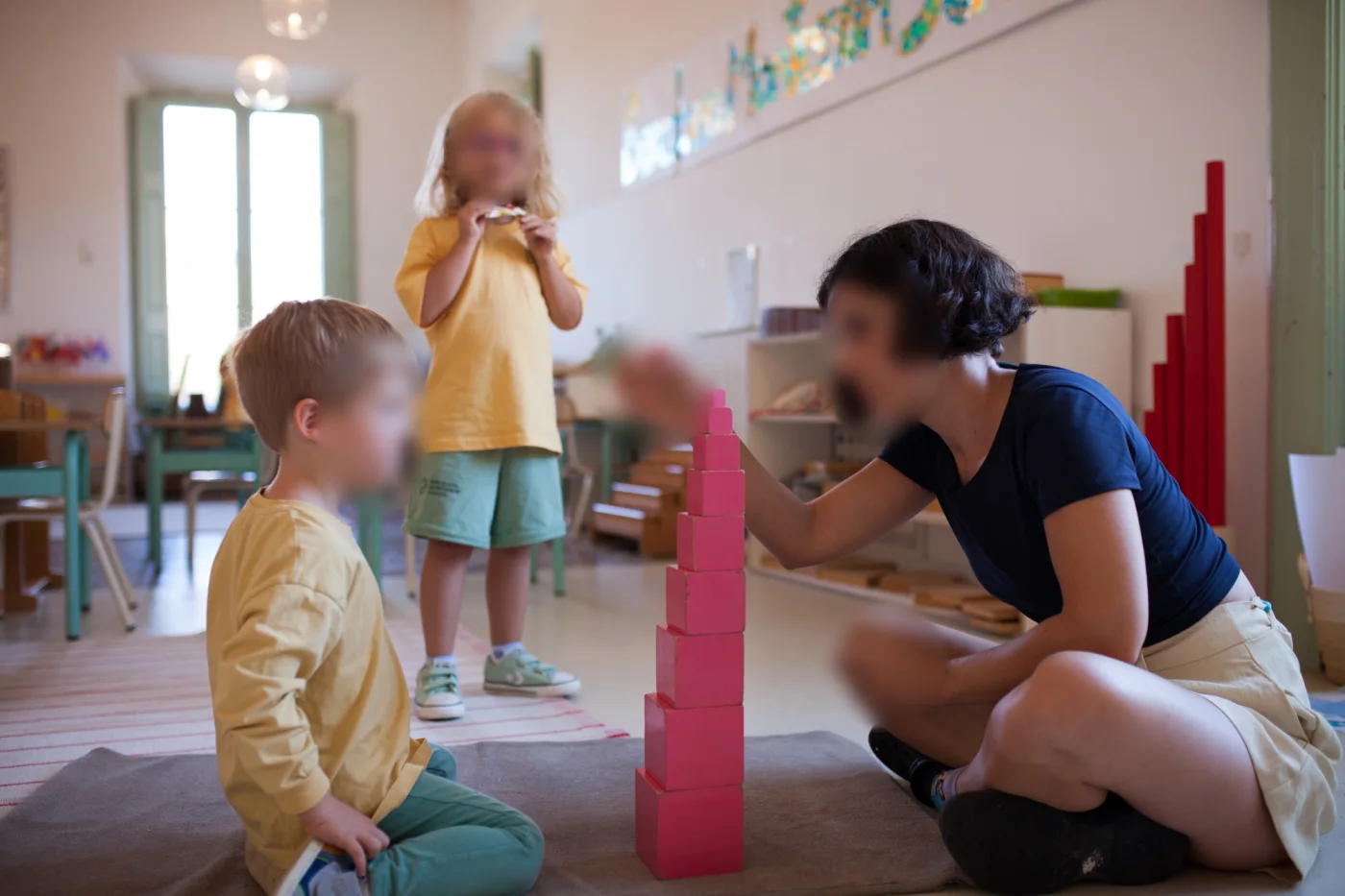
Children of different ages share a class. Older ones help, younger ones learn by watching.
The adult as a guide
The grown-up does not do it for you, but shows you the way. As children say: “Help me to do it by myself.”
Let’s talk together
Which secret do you think is the most important?
Which one can we try at home this week?
The whole world wants to know
News of the Children’s House travelled fast. In 1909 Maria wrote a book about her discoveries, and soon it was being read in many languages.
Teachers came from far away to learn from her, and Montessori schools opened in America, Europe, Asia and beyond.
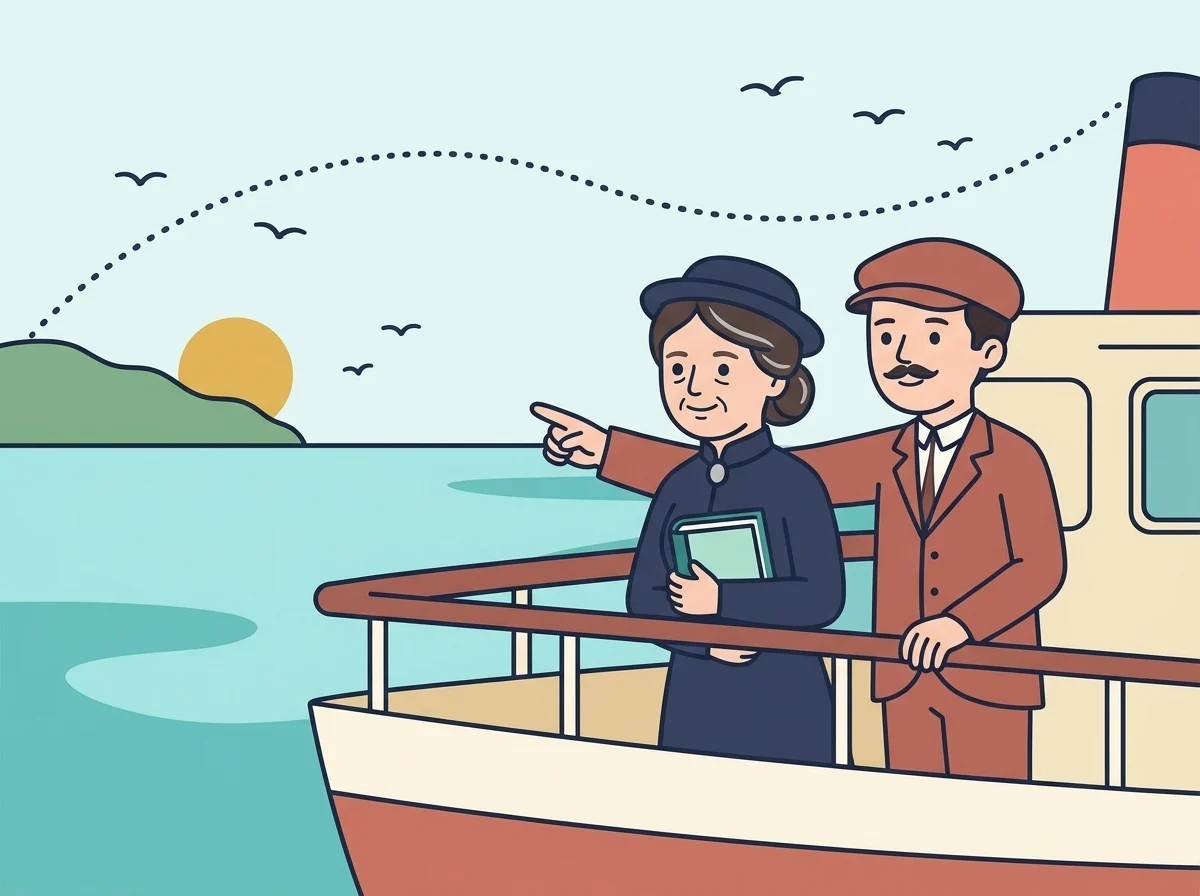
Maria travelled by train and by ship to give talks and train teachers. Her son, Mario, travelled with her and helped her with her work for the rest of her life.
Let’s talk together
If you could travel anywhere in the world, where would you go?
What would you like to teach the children there?
Maria in Barcelona
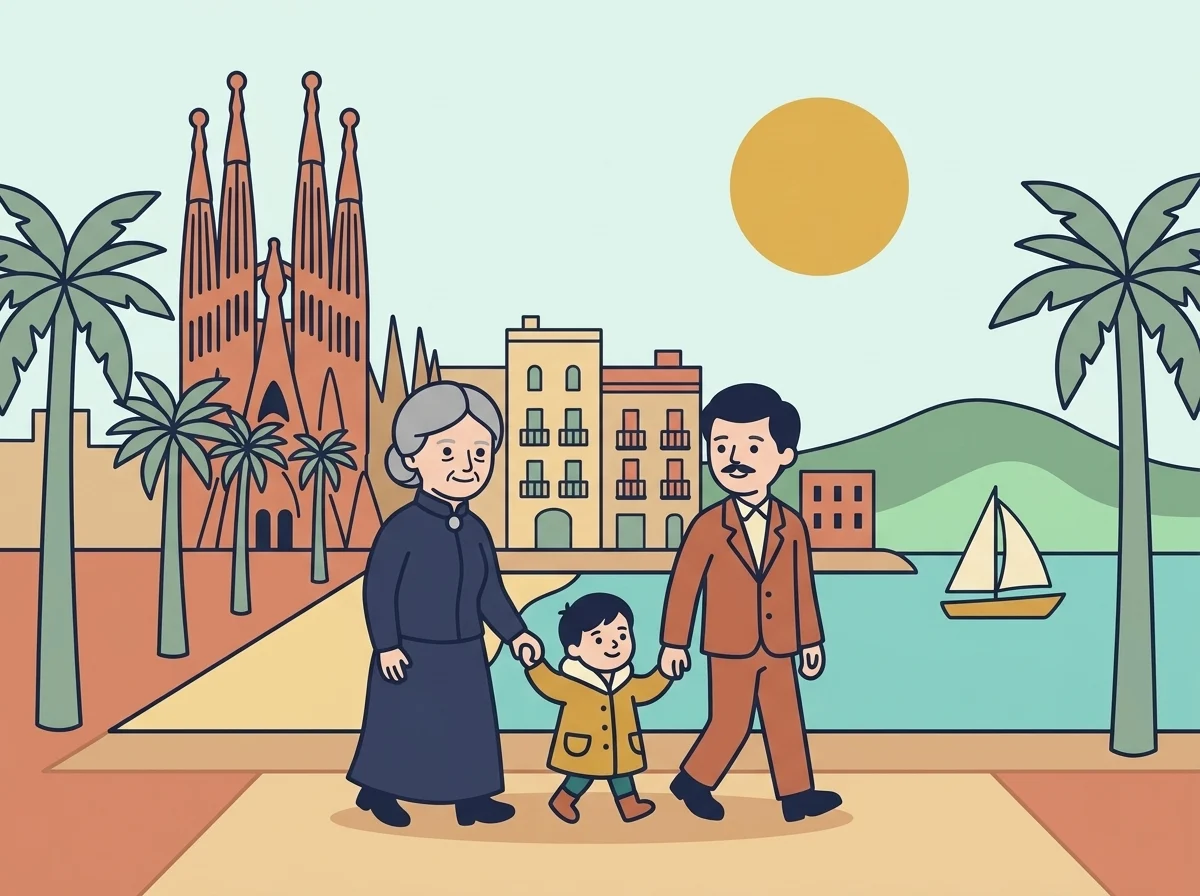
Do you know where Maria lived for twenty years? Right here, in Barcelona!
She arrived in 1916 and made our city her home, together with her son Mario and his family. From Barcelona she trained teachers and helped Montessori classes grow in schools across Catalonia.
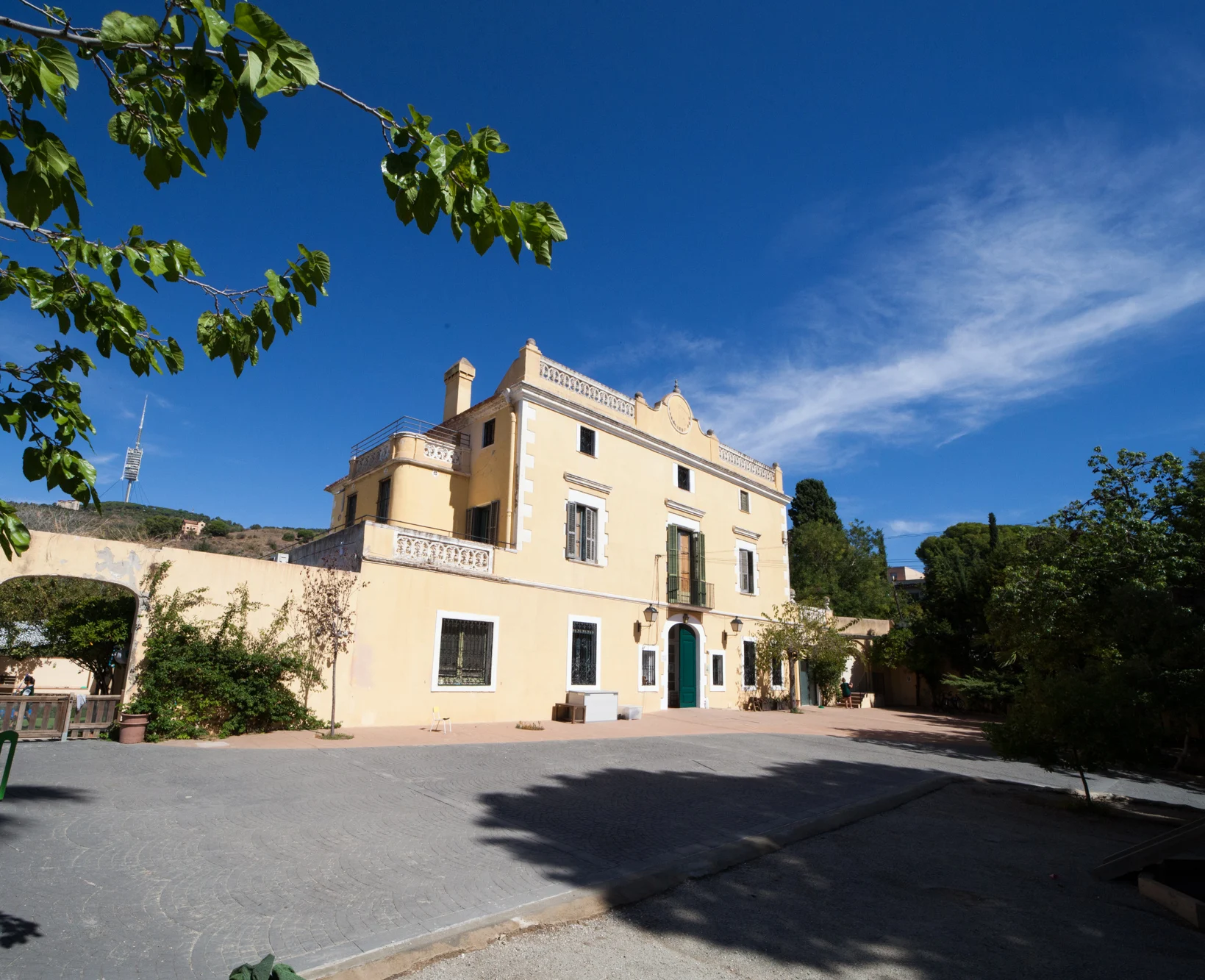
In 1936 a terrible war began in Spain, and Maria had to leave Barcelona by ship. But the seeds she planted here kept on growing — and our school is one of them.
Let’s talk together
Can you imagine Maria walking through the streets of Barcelona?
Which places in our city would you show her?
Peace begins with children.
Maria lived through very difficult times. She saw two world wars and the war in Spain. She saw grown-ups fighting and countries breaking apart, and it made her very sad.
Grown-ups tried to stop wars by signing papers and making agreements. But Maria had a different idea — an idea that came from watching children.
She remembered the little girl with the cylinders: calm, happy and concentrated. She remembered the children in the Children’s House, who took turns, helped one another and looked after their little world together.
“If children are respected,” Maria thought, “if they are helped to grow free, strong, kind and sure of themselves, they will become grown-ups who know how to live together. They will not want war.”
So Maria travelled to Geneva, Brussels, Copenhagen and many other cities to talk about peace. In Geneva, in 1932, she said:
“Establishing lasting peace is the work of education; all politics can do is keep us out of war.”Maria Montessori, Geneva, 1932
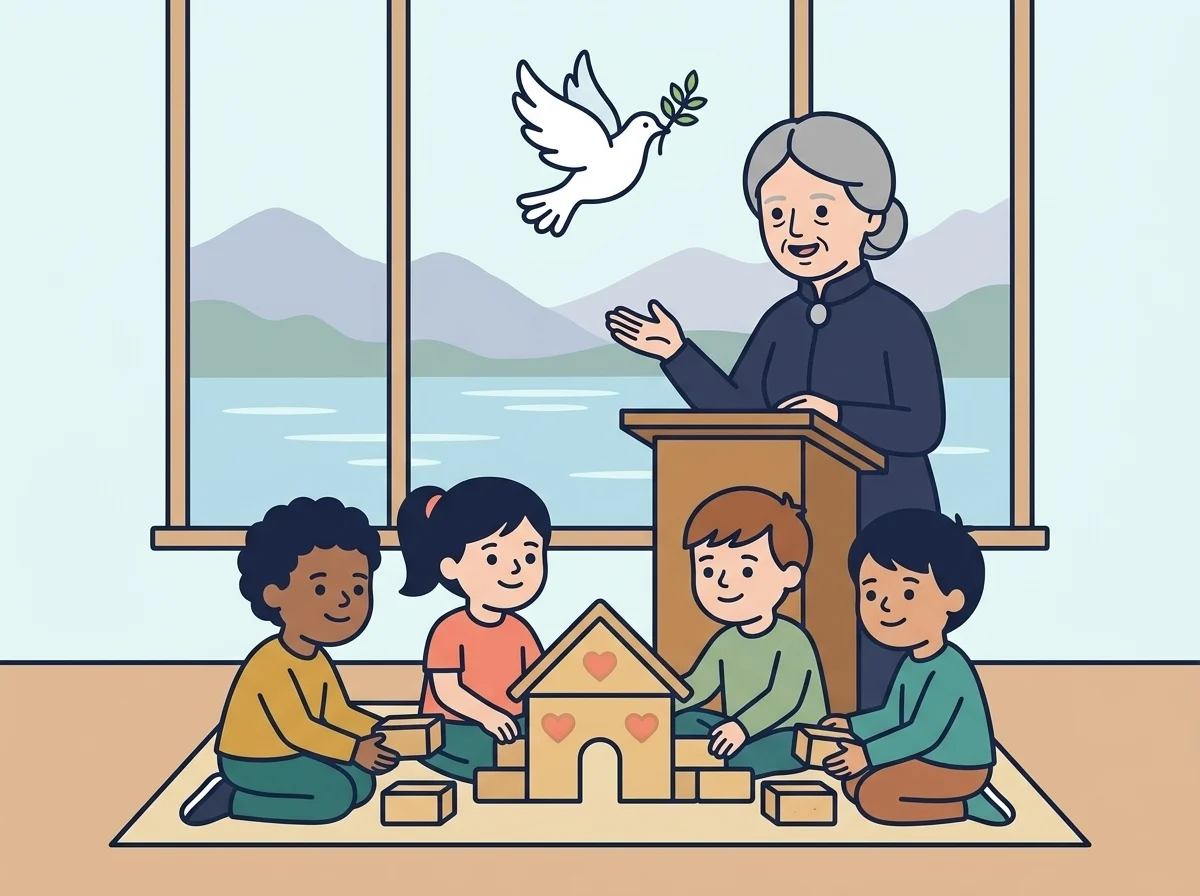
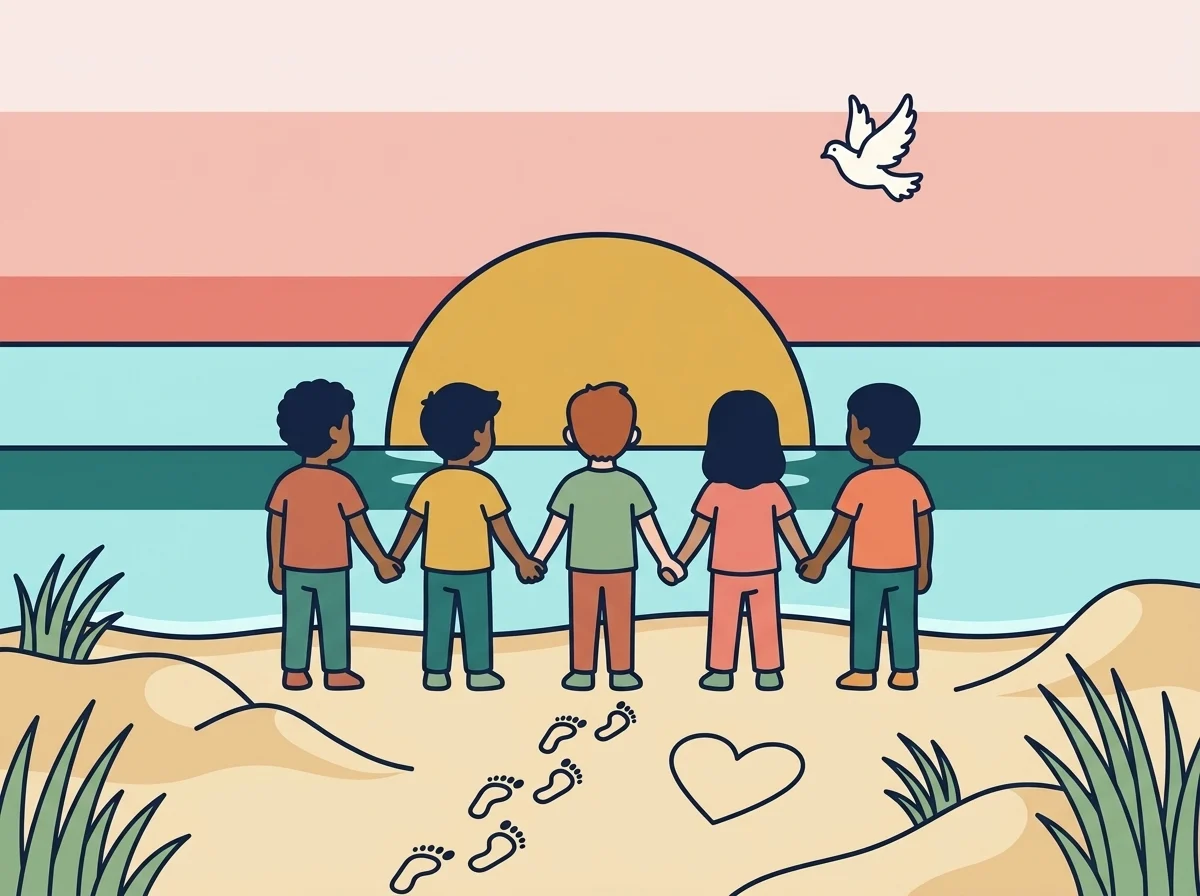
For Maria, peace is much more than “no fighting”. Peace is something we build every day, like a house, brick by brick. And the builders are the children: every child who learns to listen, to share, to say sorry and to help is building a more peaceful world.
That is why she believed that education is the best way to make peace. Not by telling children what to think, but by helping each child become the best person they can be.
Let’s talk together
What does peace feel like inside you?
What could we do today to bring a little more peace to our home?
Peace in our classroom
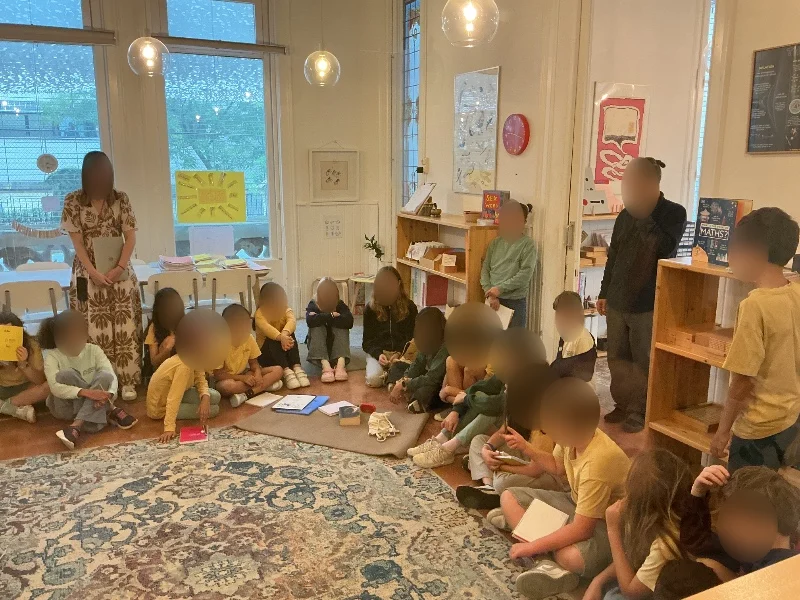
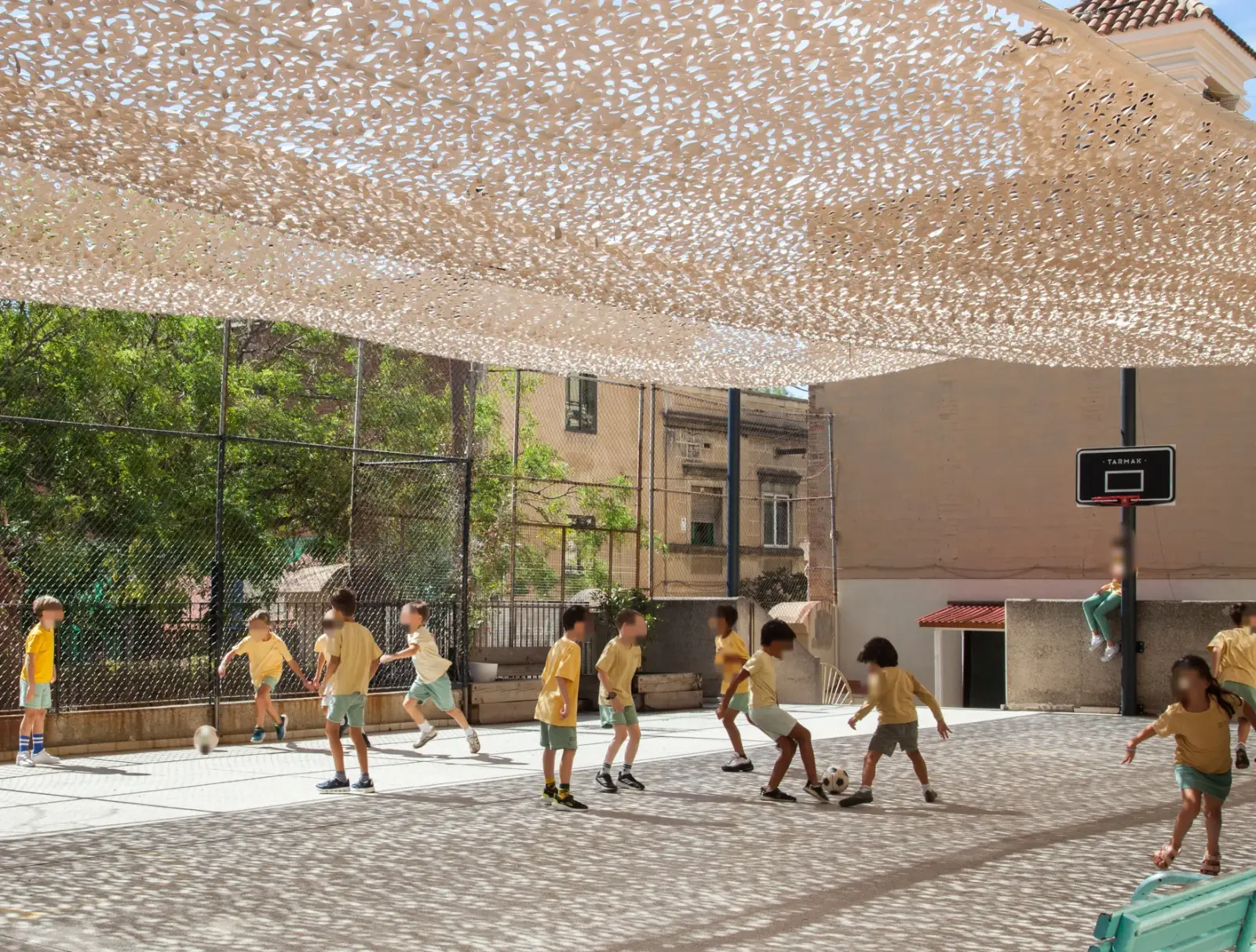
Maria’s idea of peace lives on in Montessori classrooms all around the world — and in ours too.
Children learn grace and courtesy: how to greet a friend, how to wait for their turn, how to say “excuse me”, “please” and “thank you”. They care for the plants, the animals and the classroom, so everyone can enjoy them.
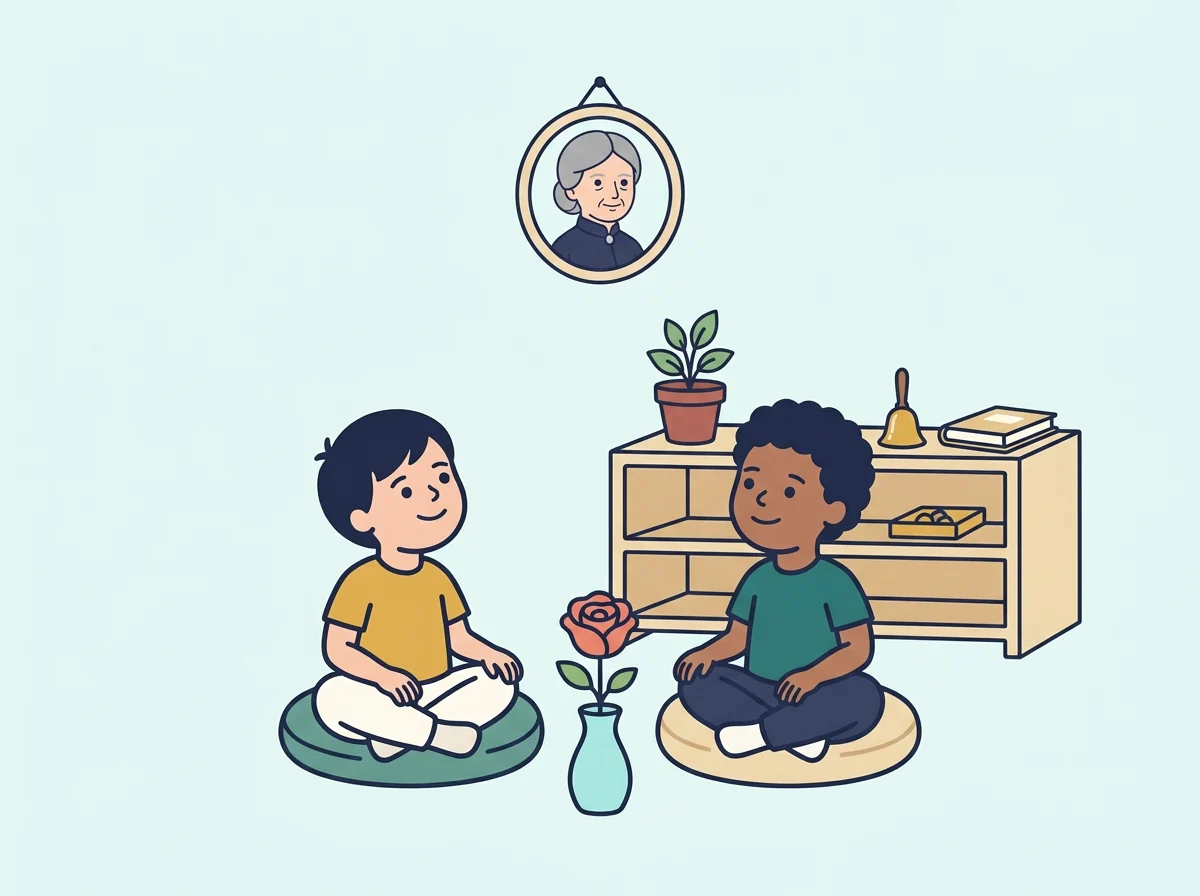
When two friends disagree, they learn to sit down together, listen to each other and find a solution with words. Many Montessori classrooms have a peace corner: a quiet place to calm down, breathe and feel better.
Every small kind act is one more brick in the house of peace.
Try it at home
- Make a little peace corner together: a cushion, a plant, a favourite book.
- Practise saying how you feel: “I feel… when…”
- Look after a plant or a pet together, every day.
- When you disagree, take turns to talk — and to listen without interrupting.
Let’s talk together
What helps you feel calm when you are upset?
What would you put in our peace corner?
Everything is connected
When Maria was almost seventy years old, she sailed to India with Mario. While they were there, war broke out around the world and they had to stay for many years.
But Maria did not stop working! She trained more than a thousand teachers and had another big idea, which she called Cosmic Education.
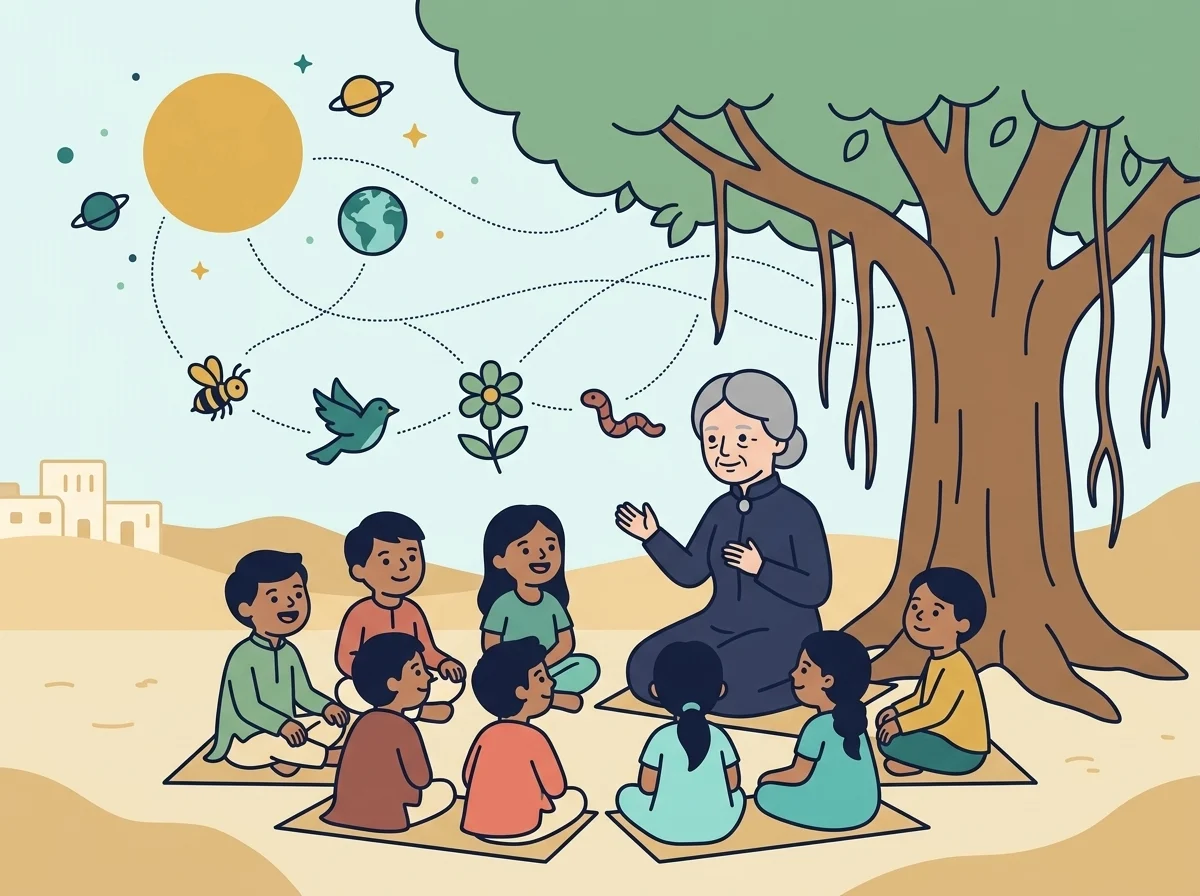
She told children the great stories of the universe: how the stars and the Earth were born, how life began, and how people learned to write and to count. Everything in the universe is connected, she said, and every creature — from the tiny worm to the tallest tree — has its own job that helps everyone else. And all the people of the world, of every colour and every country, are one big human family.
Let’s talk together
What would happen if all the bees disappeared?
How are you connected to the plants and animals around you?
A message for you
Maria came back to Europe and kept on teaching until she was very old. In 1949, 1950 and 1951 she was nominated for the Nobel Peace Prize, one of the most important prizes in the world.
On the 6th of May 1952, Maria died in a little town by the sea in the Netherlands, called Noordwijk. On her grave there is a message, written for the children of the world:
“I beg the dear all-powerful children to unite with me for the building of peace in Man and in the World.”Words on Maria Montessori’s grave, Noordwijk
Maria believed that children can change the world. And that includes you.
Let’s talk together
Maria called children “all-powerful”. What do you think she meant?
If you could help to build peace, what would you build first?
The End…
…and the beginning of your own story of peace.
Keep exploring Maria’s ideas.
If this story has made you curious, these are some of the books Maria Montessori wrote herself:
- The Montessori Method (1909) — her first book, about the Children’s House.
- The Secret of Childhood (1936) — who the young child really is.
- Education and Peace (1949) — her talks on peace and education.
- The Absorbent Mind (1949) — how children learn from birth to six.
Live Montessori with us
Our Parent Journey, talks and workshops help families bring Maria’s ideas home — including peace, independence and respect.