
Several years ago, my father was diagnosed with a rare type of dementia. The progression of the illness had been slow until recently, when my mother, his main caregiver, needed an operation and he had to go into a care home for four weeks. Whilst I cannot fault the good intentions of the staff, the experience left my father more confused about who he was and his relationships with the people around him. For this reason, on my last visit to see them, I used my Montessori for dementia training to create a memory book for him.
What is the purpose of a memory book?
A memory book is designed to remind the person living with dementia who they are and who the people around them are. This, in turn, is designed to lower their anxiety and reduce the need for caregivers to repeat themselves constantly. It is another example of the Montessori environment providing the information, so that the “knowledgeable other” — whoever is holding all that information in their head — doesn’t have to. A memory book can also become a source of conversation and connection for anyone visiting or caring for that person, which makes it a great tool for transitions, such as moving into a care home or welcoming a new carer.
What should you include in a memory book?
This will vary depending on the person and the stage or type of dementia. For some people, memories of the past, such as parents or siblings, can be reassuring, as their long-term memory may be less affected. For others, when a person is no longer in their lives, it may be easier to leave them out, to avoid upsetting questions or reminders. If someone is about to move into a care home, including photos of their previous home — or even the new one — can sometimes trigger sadness or anger, so these may be best left out. The most important people to include are those who are regularly present — typically friends, family, or regular caregivers.
You will need
- An A4 book or folder — I chose a book with thick pages for easier turning, but if the book needs regular updating, you might prefer a folder.
- A photo of anyone or anything important.
- A short description of the person or item in the photo, written in the first person.
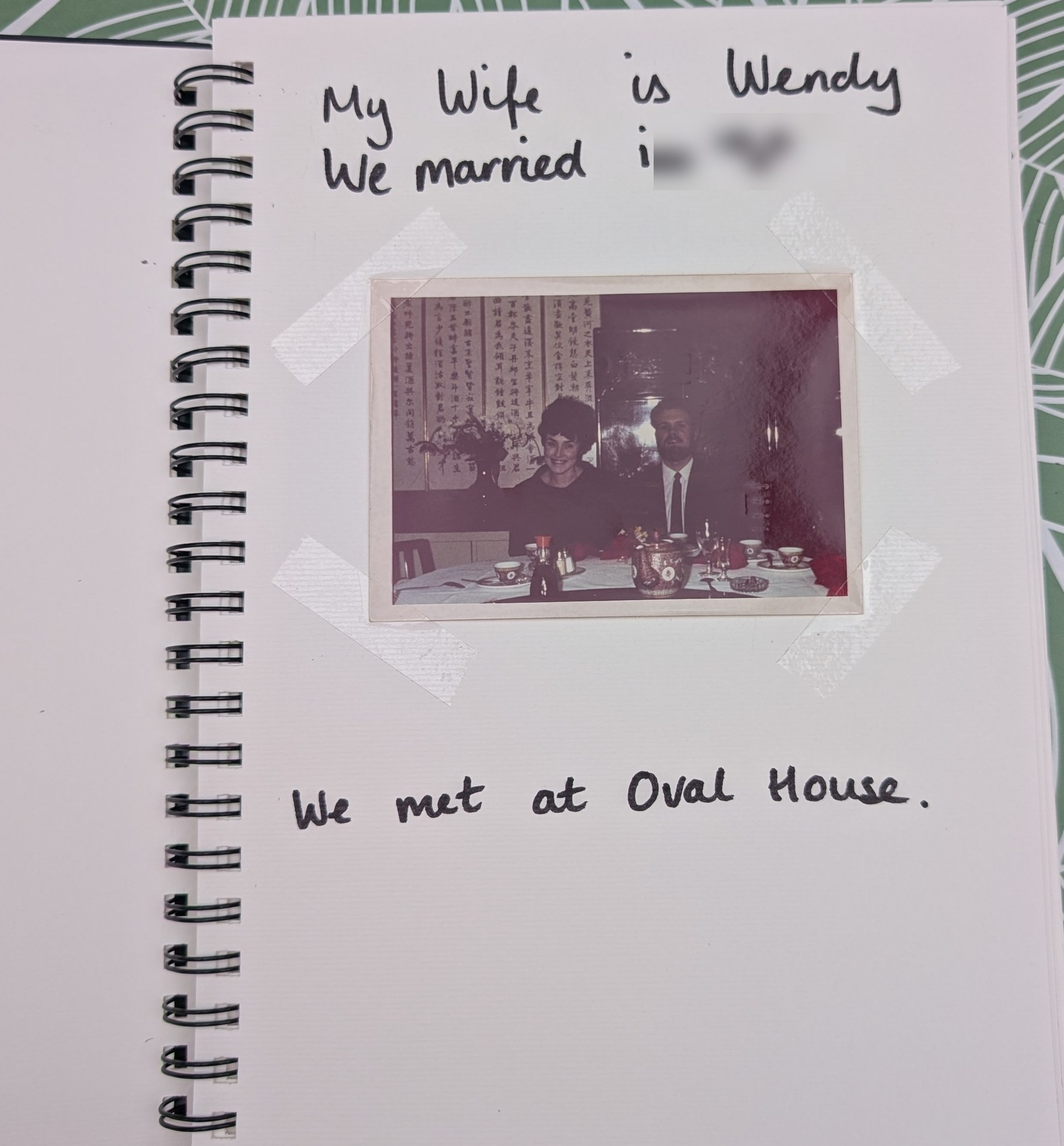
Since my father has had his memory book he enjoys looking at it. He particularly likes the photos of his parents, home and grandchildren, as well as friends from the past — and, of course, his own.