
Starting school after the summer is never easy, and for our littlest ones, it’s no exception. Despite that, this month I’ve focused on building a secure bond with each child; making sure they feel loved, heard, and given extra hugs and understanding along the way. Thanks to that, it’s been a month where I’ve gotten to see them enjoying their favourite corners, the materials that catch their attention most, and of course, the activities they love doing best.
Here’s a little glimpse into what we’ve been working on together.
Settling In & Building Trust
This month has really been about one thing — learning that this is a safe place, and that goodbyes are always followed by hellos. Mornings can still be tricky for some of them, and that’s completely normal. We hold that moment with patience and lots of warmth, and week by week, I’ve been seeing more smiles at drop-off and more confidence in the environment.
Food Prep Activities on Demand!
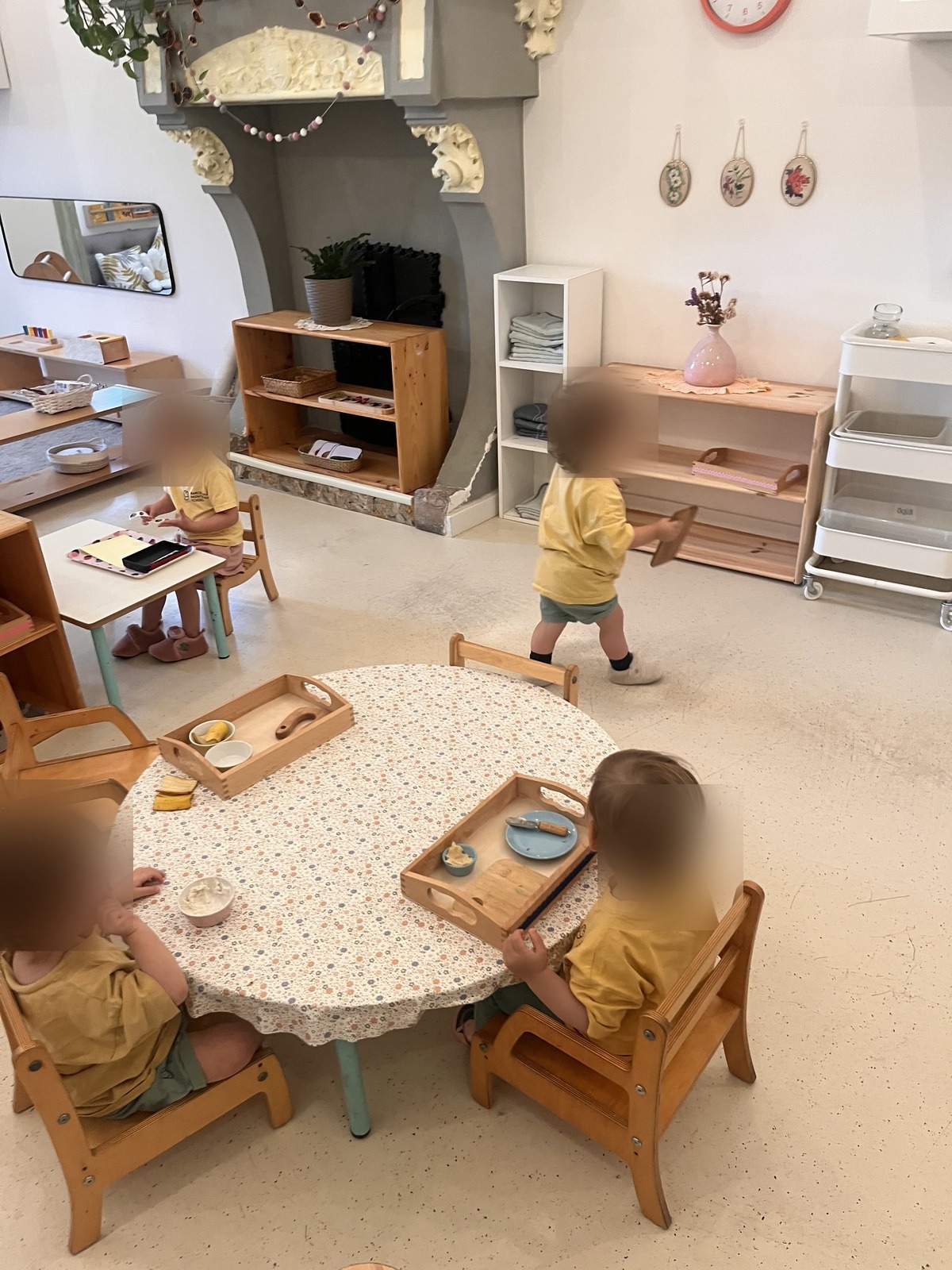
The food prep shelf has been a hit! Spreading with a small knife, pouring oats into yogurt, using a spoon to stir and mix, peeling a banana, carrying trays with care. These everyday tasks may look simple, but they’re teaching real concentration, coordination, and a lovely sense of “I can do this myself.” It’s something that, right now, gives them real confidence in themselves.
Tiny Hands, Big Moves!
I’ve introduced a wide range of materials to help strengthen their fine motor skills: the peg box, dressing frames, stickers, and glue stick collages. These aren’t always easy, they take real patience and dexterity, but we’re already seeing steadier little hands and growing focus.
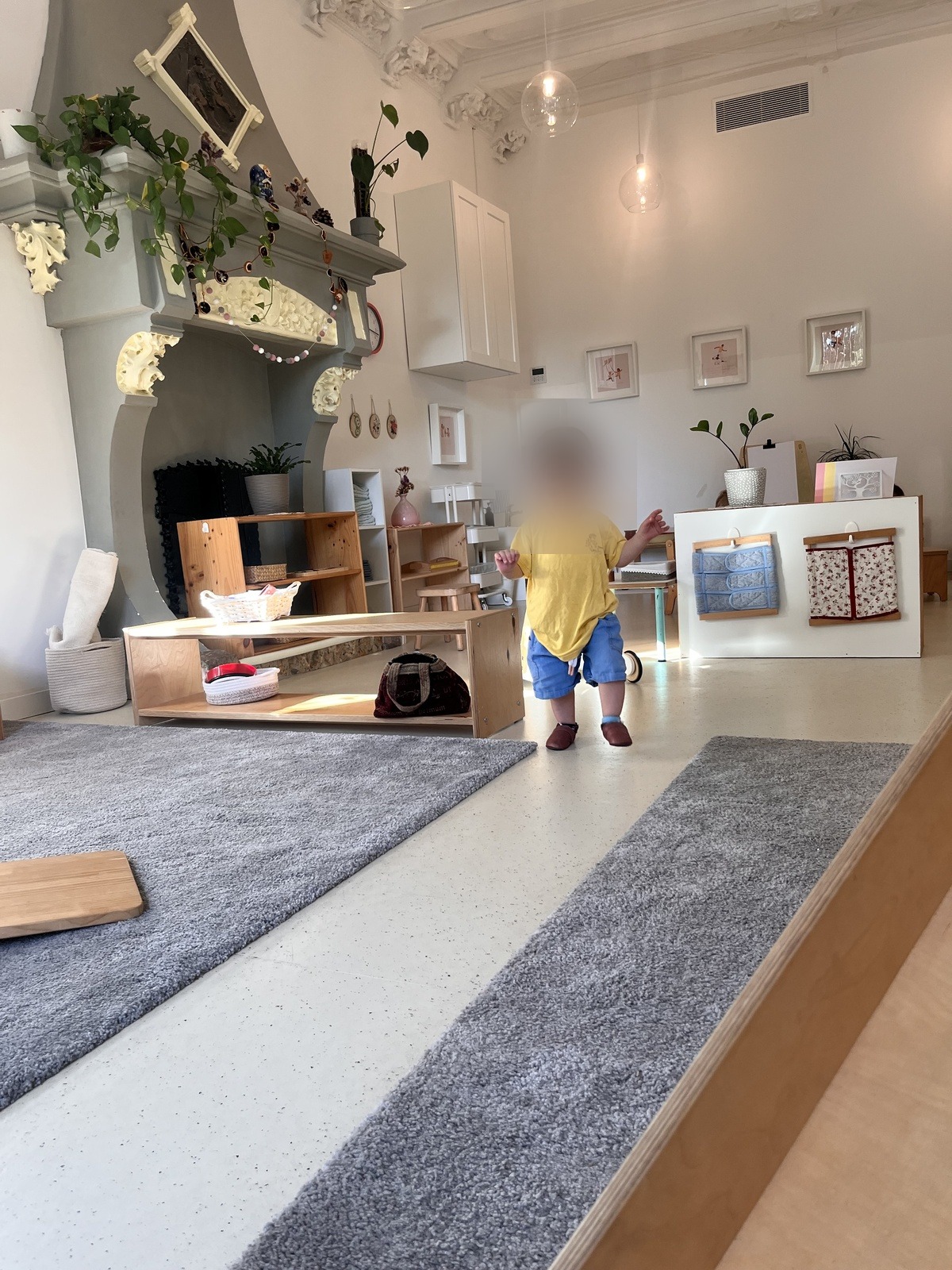
Big movement milestones this month! Climbing the stairs and slide, cruising more confidently, and some very exciting first independent steps. In Nido, we try to give each child plenty of space and time to move at their own pace, without rushing in to help too quickly. Their bodies know what they’re doing! It all comes in time, when we prepare the right environment, respect their rhythms, and trust in them.
Words Are Blooming
So much beautiful language happening lately; real object vocabulary, naming vegetables and animals, singing songs… Every day I hear more sounds, more words, and above all, more interaction between them. All of them are right now in the middle of a sensitive period for language, and it’s wonderful to watch new words and sounds emerge almost daily.
And perhaps my favourite part to witness: the children playing together. Passing a ball, climbing side by side, laughing at nothing in particular. These small moments of connection are where friendship and empathy quietly begin.
A Few Tips for Home!
- Follow their pace with walking. Try to avoid holding both hands (or even one!) to help them walk; let them cruise along furniture and choose when to let go. It protects their natural development and builds real confidence.
- Talk to them often, and slowly. Name what you’re doing, what you see, what they’re holding. Simple, unhurried language is the best fuel for this stage.
- Let them do it themselves. Even if it’s slower or messier, spreading their own butter, carrying their own cup. These small acts of independence matter enormously right now.
- On naps and needing extra closeness. At this age, many children are working through some anxiety around rest and separation, and it’s common to see them ask for a hand, for us to stay close, or to wake up crying and needing quick reassurance. This is a normal part of this developmental stage, not something to worry about. We respond with calm, physical closeness; without creating dependency on it, so they learn that rest is safe, even without needing constant contact to fall asleep. If this comes up at home too, a similar approach can help: offering your presence and reassurance, while gently and gradually giving them space to settle on their own.
A Book We Love
If you’re looking for a good read on this stage: The Montessori Toddler by Simone Davies. It’s warm, practical, and full of simple ideas for bringing this same spirit of independence, patience, and respect for your child’s pace into your home.
Thank you for your trust!