Margaret Mead,
the explorer who learned from children.
The story of her life and her big ideas, written for grown-ups and children to read side by side, one chapter at a time.
Snuggle up together. Read one or two chapters at a time. When you reach the questions, stop and listen to your child’s answers. There are no wrong ones. Margaret would have done exactly the same: she travelled all over the world to listen to children and write down what they said.
A girl with a notebook
On the 16th of December 1901, a baby girl was born in Philadelphia, a big city in the United States of America. Her parents named her Margaret.
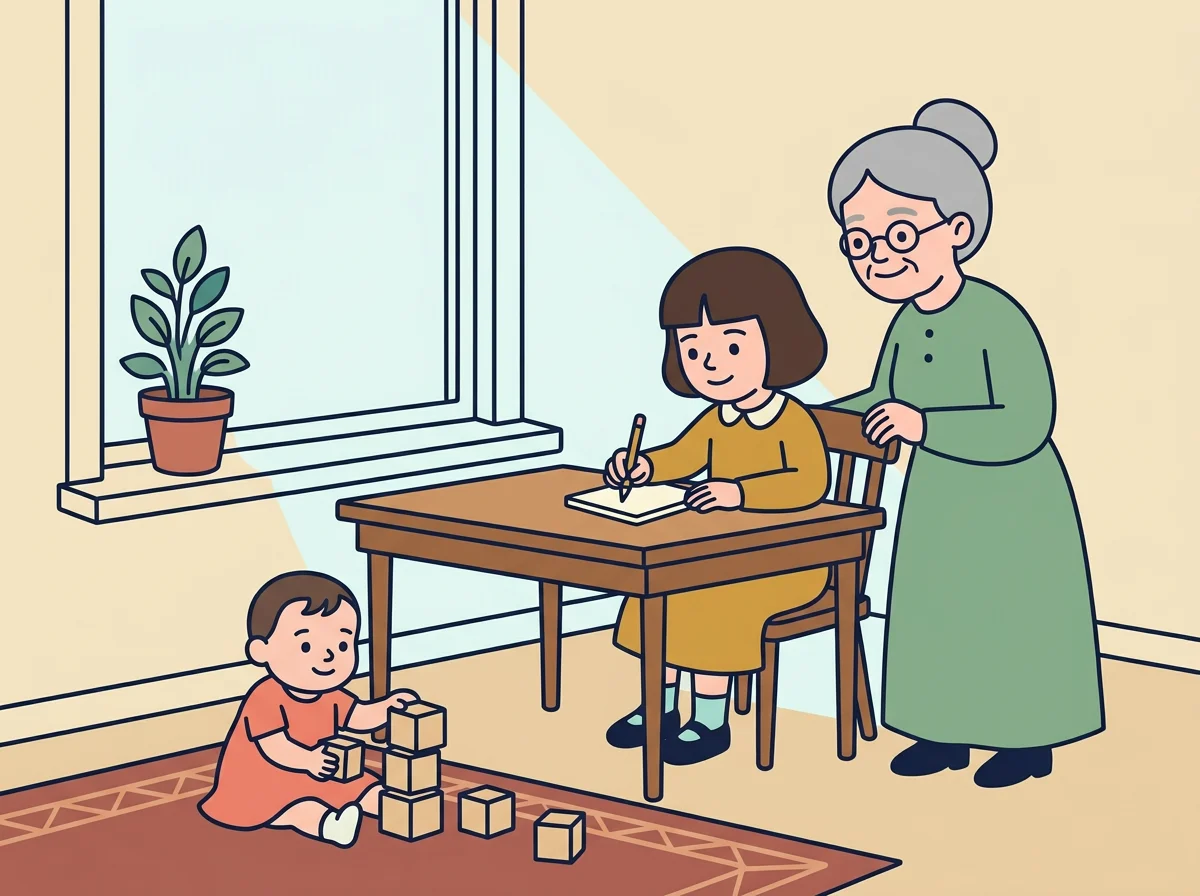
Her father taught at a university, and her mother studied the families who had come to America from Italy to start a new life. The family moved house so often that Margaret hardly went to school. Instead, her grandmother Martha, who had been a teacher, taught her at home.
Grandmother Martha taught Margaret to look carefully at plants, at animals and at people. Margaret’s mother kept notebooks about how Margaret was growing, and soon Margaret had a notebook of her own. In it she wrote down every new word her little sister learned to say.
Let’s talk together
What do you notice about the people in your family?
If you had a noticing notebook, what would you write in it first?
So many ways to live
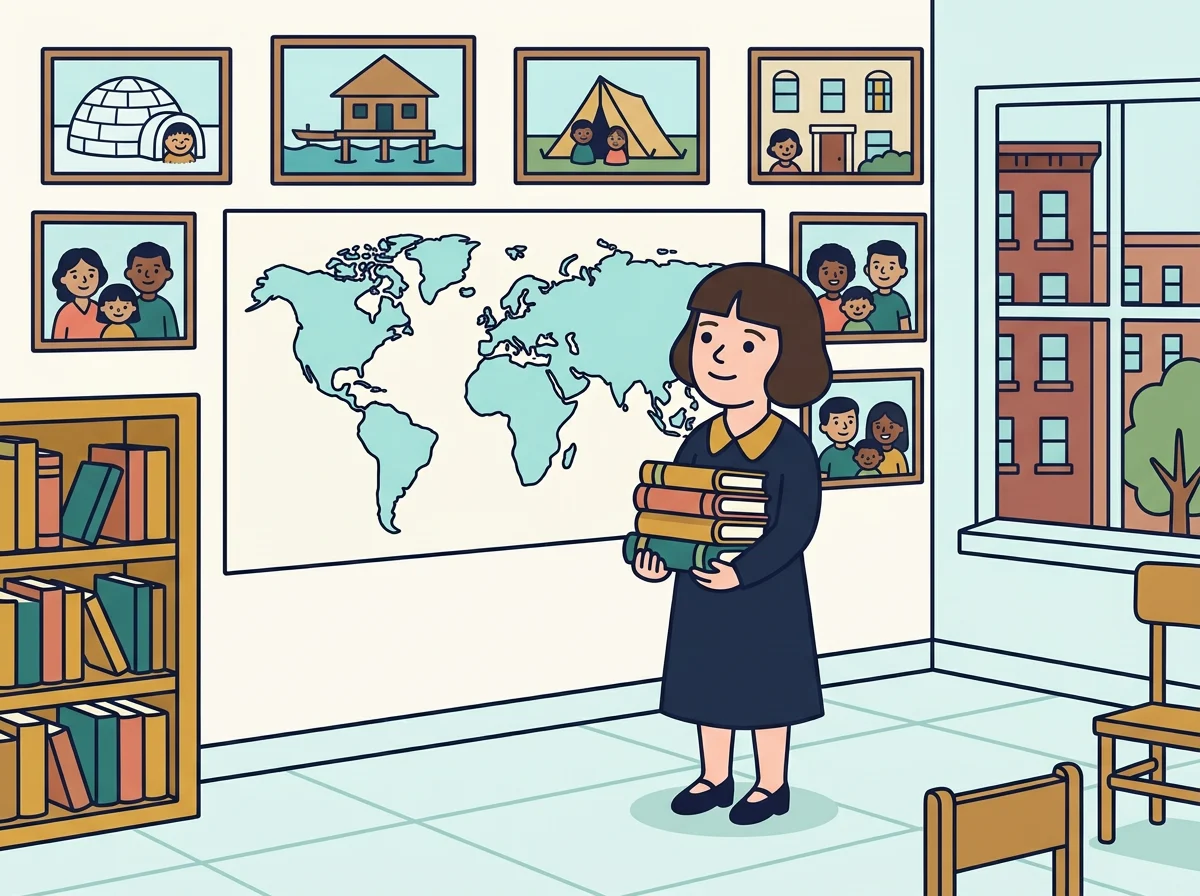
When Margaret grew up, she went to university in New York. There she met a wise professor called Franz Boas and a teacher called Ruth Benedict, who became her great friend. They studied anthropology: the science of people, and of all the different ways they live.
Margaret learned something amazing. All the people in the world belong to one human family, but they grow up in very different ways. They eat different food, sing different songs, and have different ideas about what is polite and what is good. All of this together is called culture.
So Margaret made up her mind. She wanted to travel to faraway places, to meet the children and families who lived there, and to learn how they lived.
Let’s talk together
What does your family eat on a special day?
Is there something your family does differently from other families?
Across the ocean to Samoa
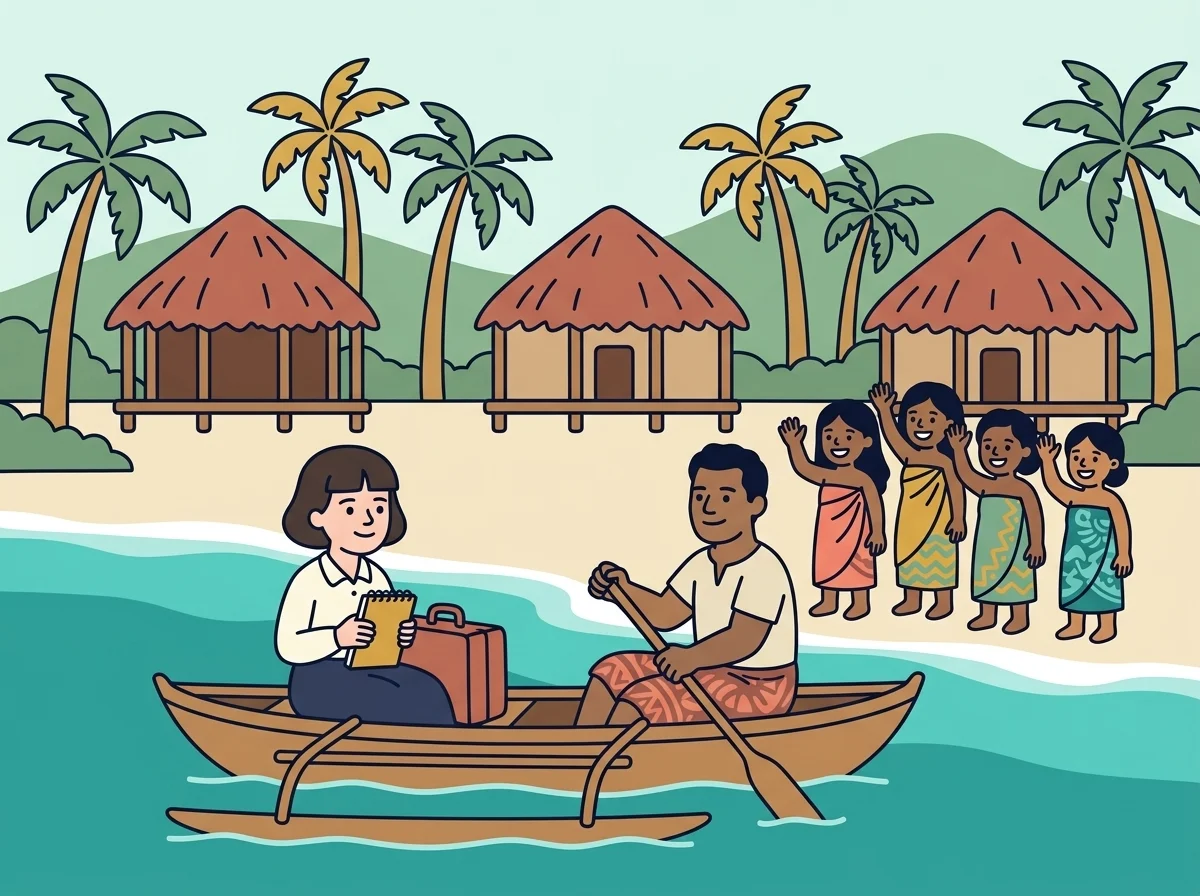
In 1925, when she was 23 years old, Margaret set off on a long journey by train and by ship, right across the Pacific Ocean, to the islands of Samoa.
Her professor was worried. It was very far away, and she would be travelling on her own. But Margaret was brave, and she had made up her mind.
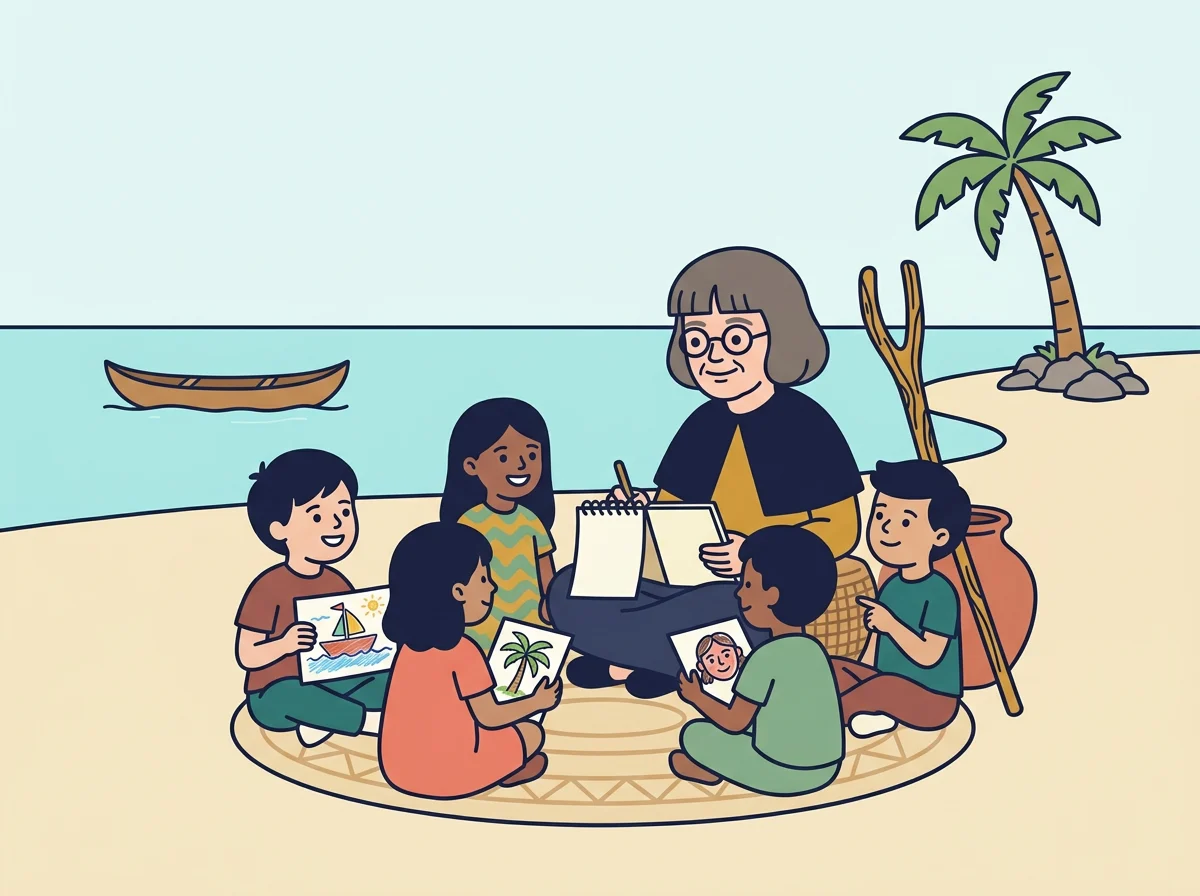
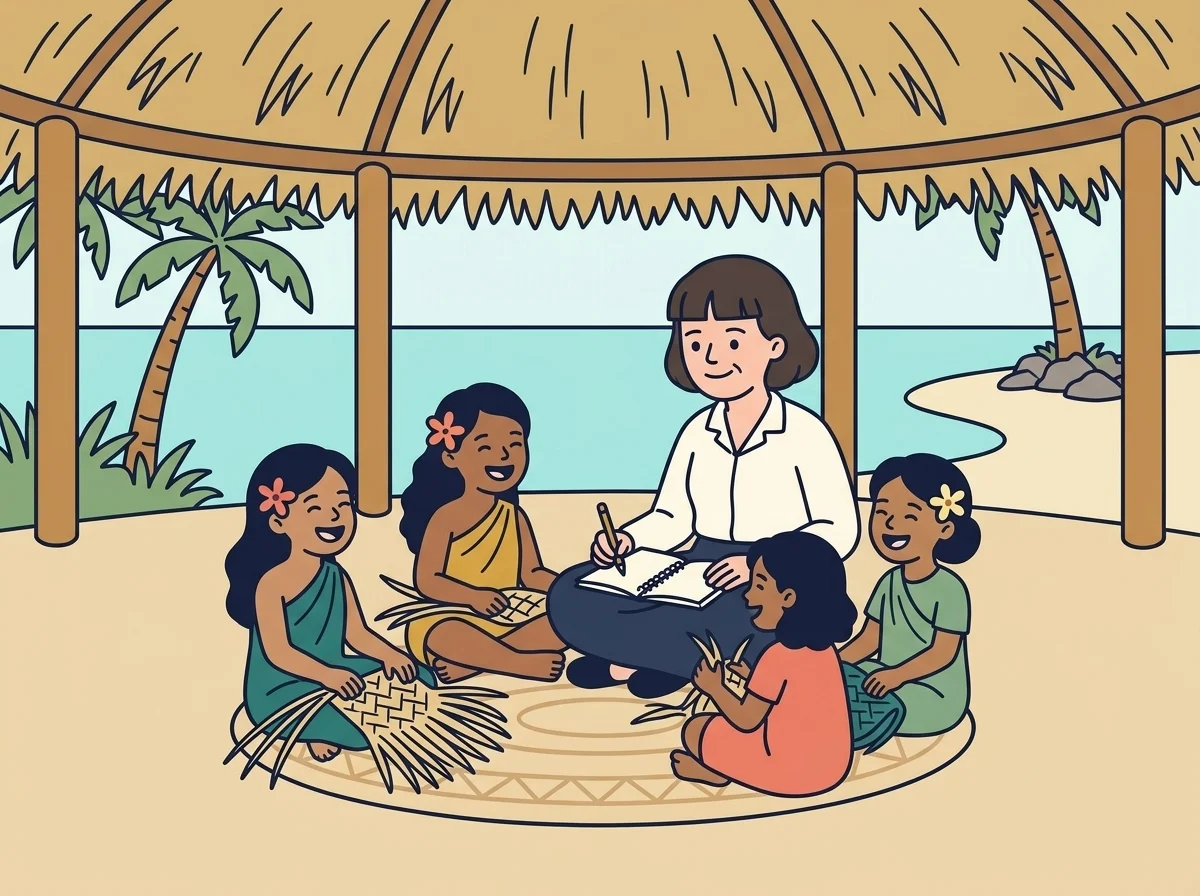
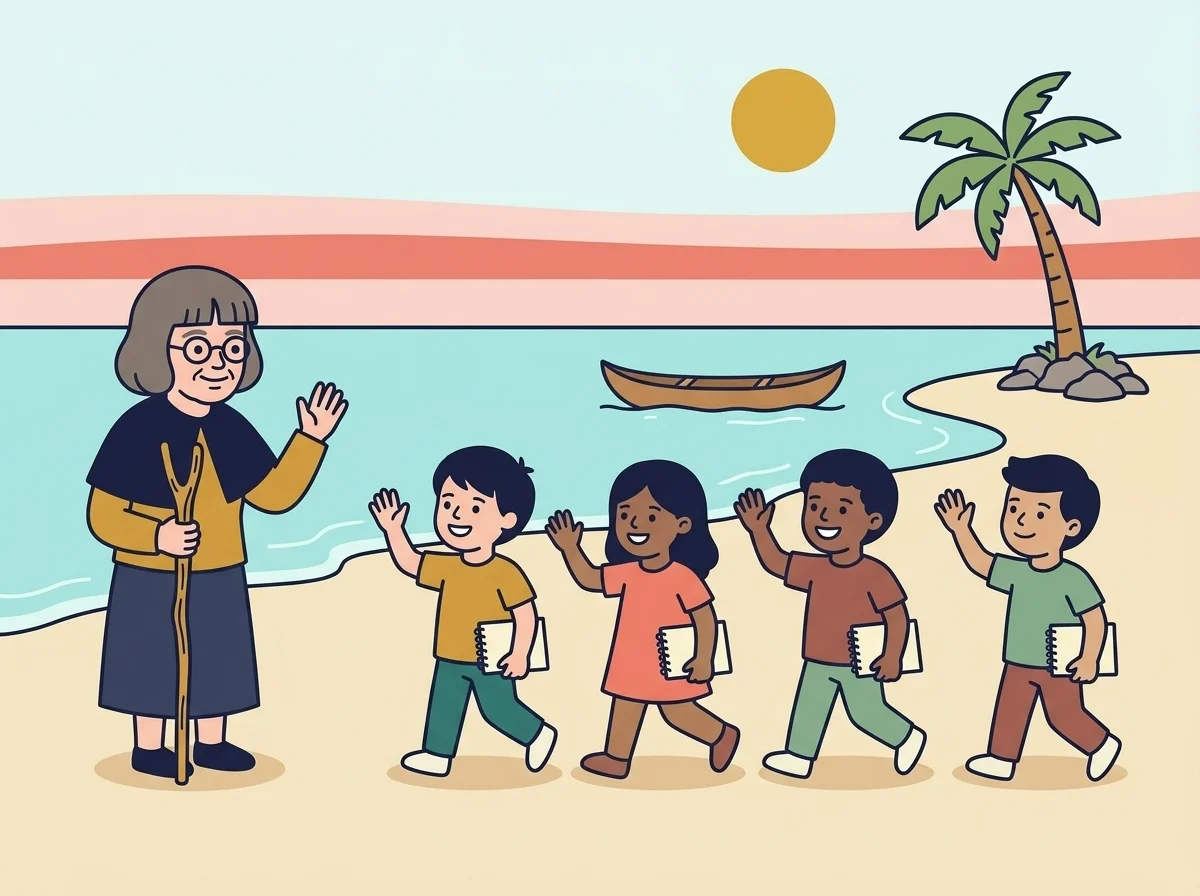
She went to live on a small island called Ta‘ū, with palm trees, a warm sea and houses with no walls. She learned to speak Samoan, ate Samoan food and spent her days with the girls of the village. She played with them, listened to them and wrote everything down in her notebooks.
Let’s talk together
How would you feel if you lived somewhere where nobody spoke your language?
What would you do to make new friends there?
Growing up is different everywhere
Margaret had travelled to Samoa to answer a big question: is growing up hard and stormy for every teenager in the world, or does it depend on where you live?
The girls she met seemed to grow up more calmly than many teenagers in America. Margaret thought she knew why. The way we grow up depends a lot on the world around us: our family, our village and our culture.
In 1928 she wrote a book about it called Coming of Age in Samoa. Many, many people read it, and it made parents and teachers think again about how they were bringing up their own children.
Let’s talk together
What is the best thing about growing up?
What do the grown-ups around you do that helps you grow?
Children of the lagoon
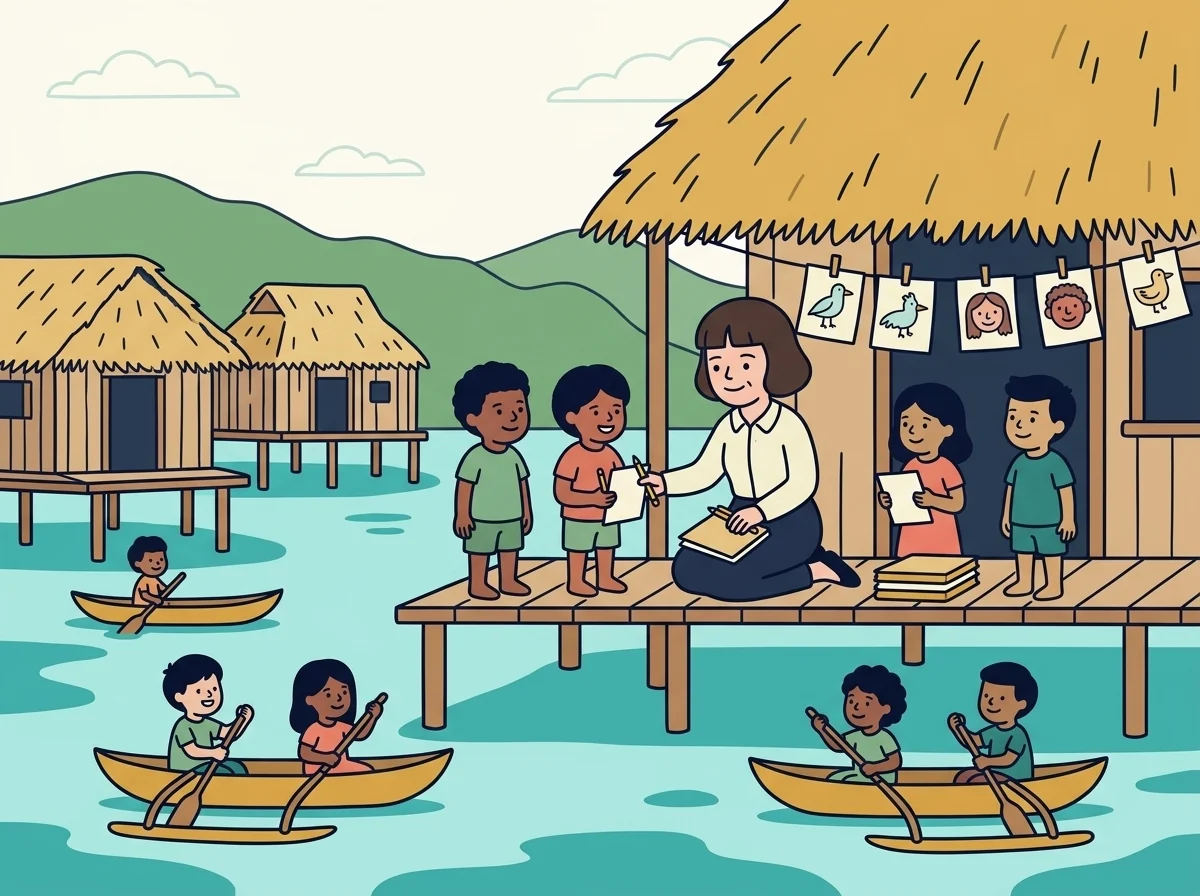
Next, Margaret sailed to an island called Manus, near New Guinea. In the village of Pere, the houses stood on tall wooden legs, right in the water of a big blue lagoon.
The children there learned to swim almost as soon as they could walk, and even very small children paddled their own little canoes.
Margaret gave the children something most of them had never had before: paper and pencils. They drew and drew and drew, and Margaret kept piles and piles of their drawings. She wanted to understand how children think. The grown-ups of Pere told many stories about spirits, but the children looked for practical reasons: the canoe floated away because nobody had tied it up properly.
Let’s talk together
If someone gave you paper and pencils for the very first time, what would you draw?
What do you think your drawings tell people about you?
Margaret’s field notebook
Margaret worked like a detective of everyday life. Wherever she went, she followed the same careful steps. Here are Margaret’s secrets for understanding people:
Look carefully
Notice the small things: how people greet each other, eat, play and work.
Listen more than you talk
Everyone has a story. Give them the time to tell it.
Write it down
Notes, drawings and photos help you remember what you really saw.
Learn their words
Speaking someone’s language is the best way to understand them.
Join in
Eat the food, play the games and share the work, not just watch.
Different is not wrong
Every culture has its own good reasons. Be curious before you judge.
Share what you learn
Tell others, so that everyone can understand each other a little better.
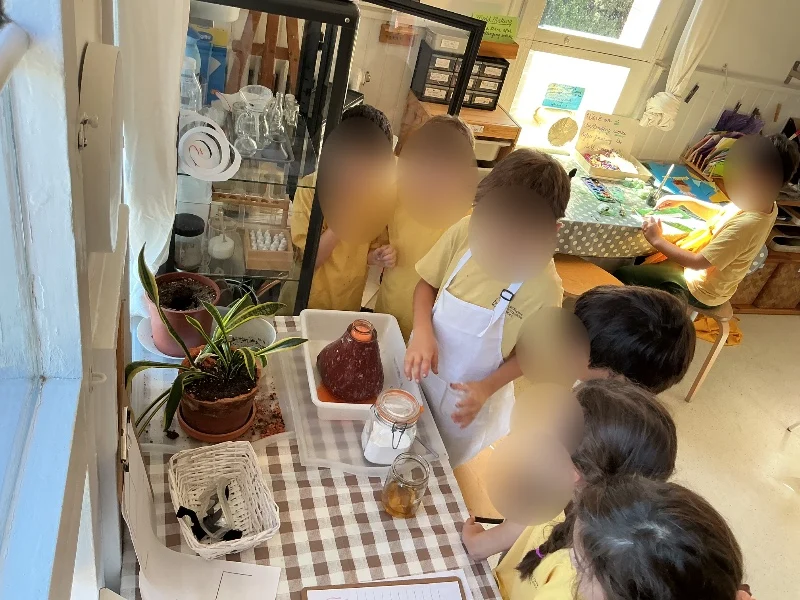
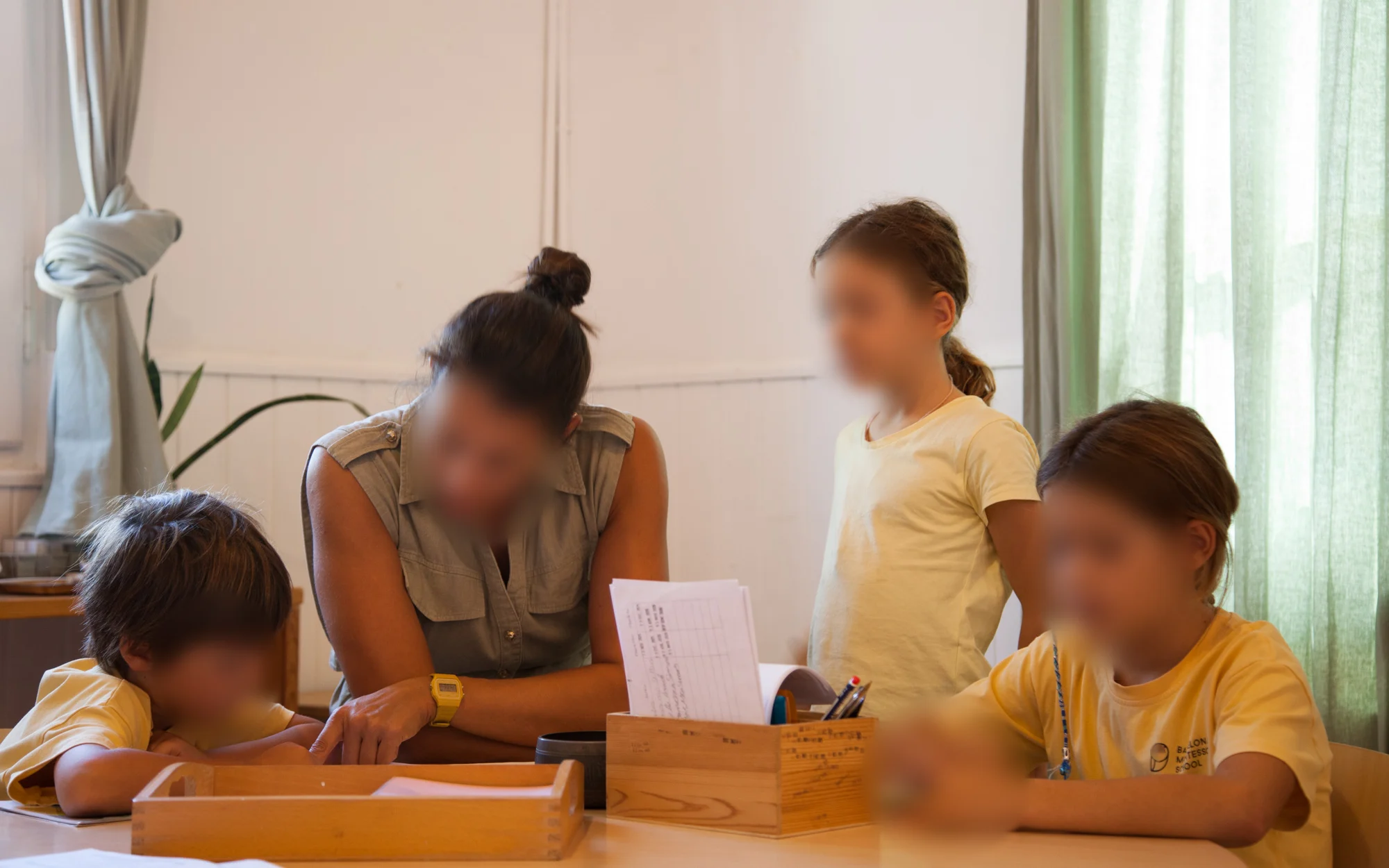
Does this remind you of someone? Maria Montessori also watched children patiently, like a scientist, before deciding how to help them. In our classrooms, the guides still observe the children and keep notes every day.
Let’s talk together
Which of Margaret’s secrets would you like to practise this week?
Who could you listen to really carefully today?
Three villages by the river
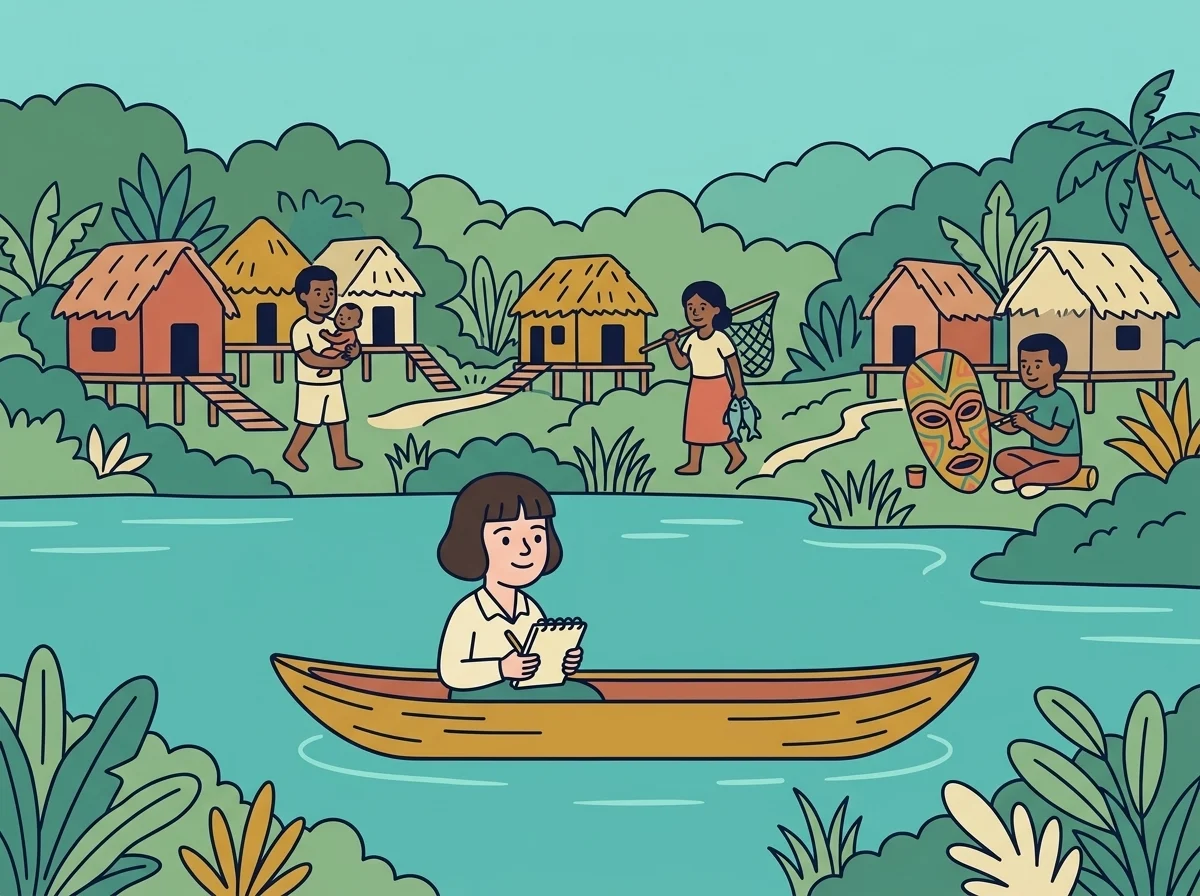
Margaret travelled up a great river in New Guinea called the Sepik. Along its banks she lived with three different peoples who did not live far from one another.
Among the Arapesh, both men and women were gentle and caring, and everyone helped to look after the children. Among the Mundugumor, both men and women were fierce and quick to argue. And among the Tchambuli, the women went fishing and trading, while the men spent much of their time on art, music and decorating themselves.
Margaret realised that a lot of how we behave is something we learn. Boys can be gentle, girls can be brave, and every child can grow in their own way.
Let’s talk together
Has anyone ever told you that something is only for boys, or only for girls?
What do you think about that?
A camera in Bali
Margaret’s next journey was to the island of Bali, with her husband Gregory Bateson, who was an anthropologist too.
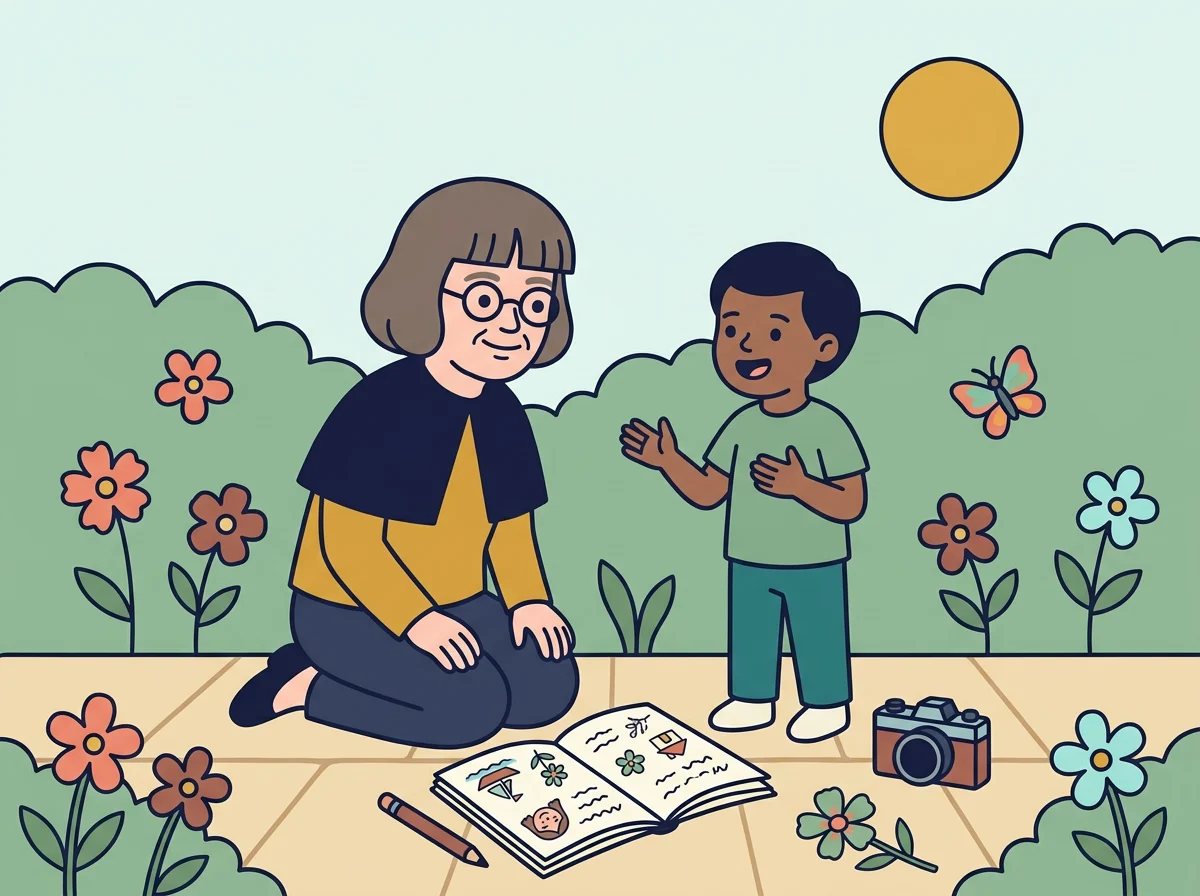
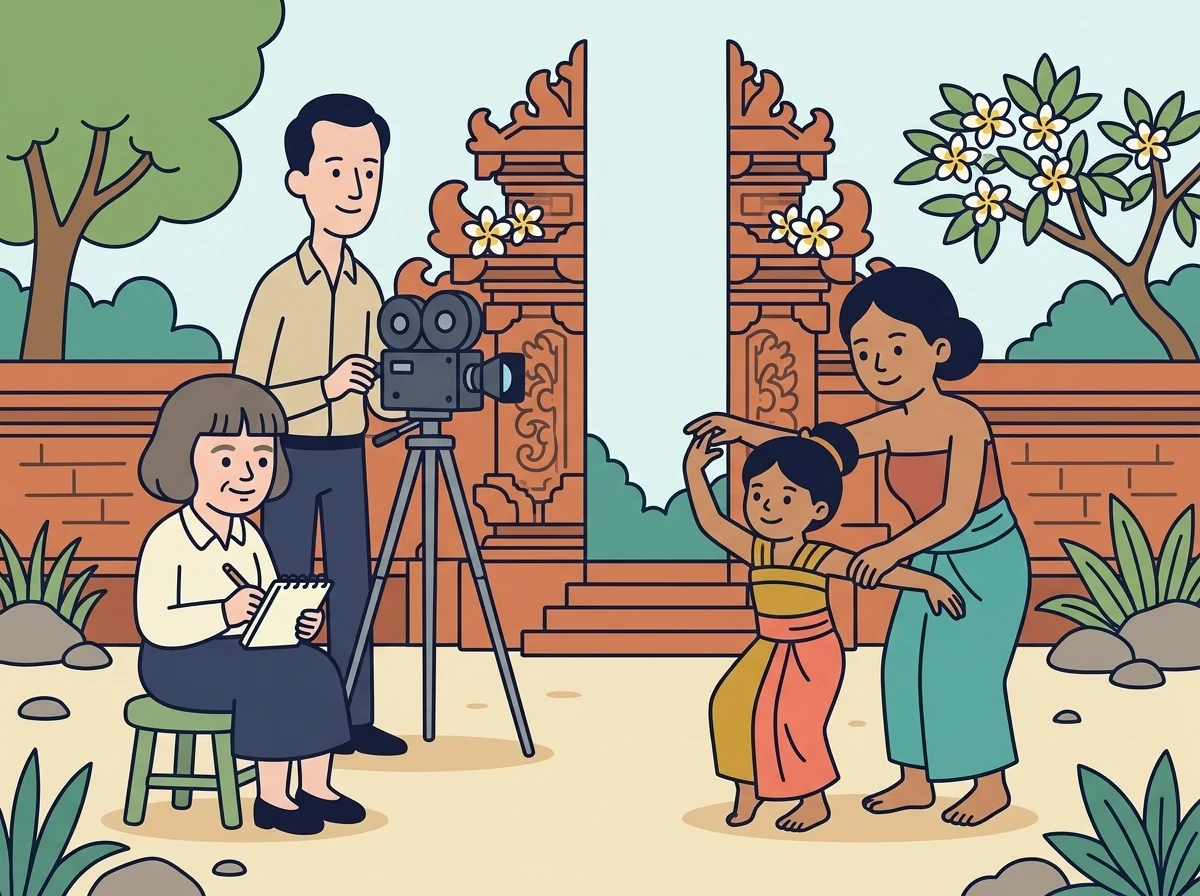
This time they brought cameras as well as notebooks. Together they took about 25,000 photographs and filmed many hours of everyday life: babies being carried, children playing, people dancing, carving and preparing for festivals.
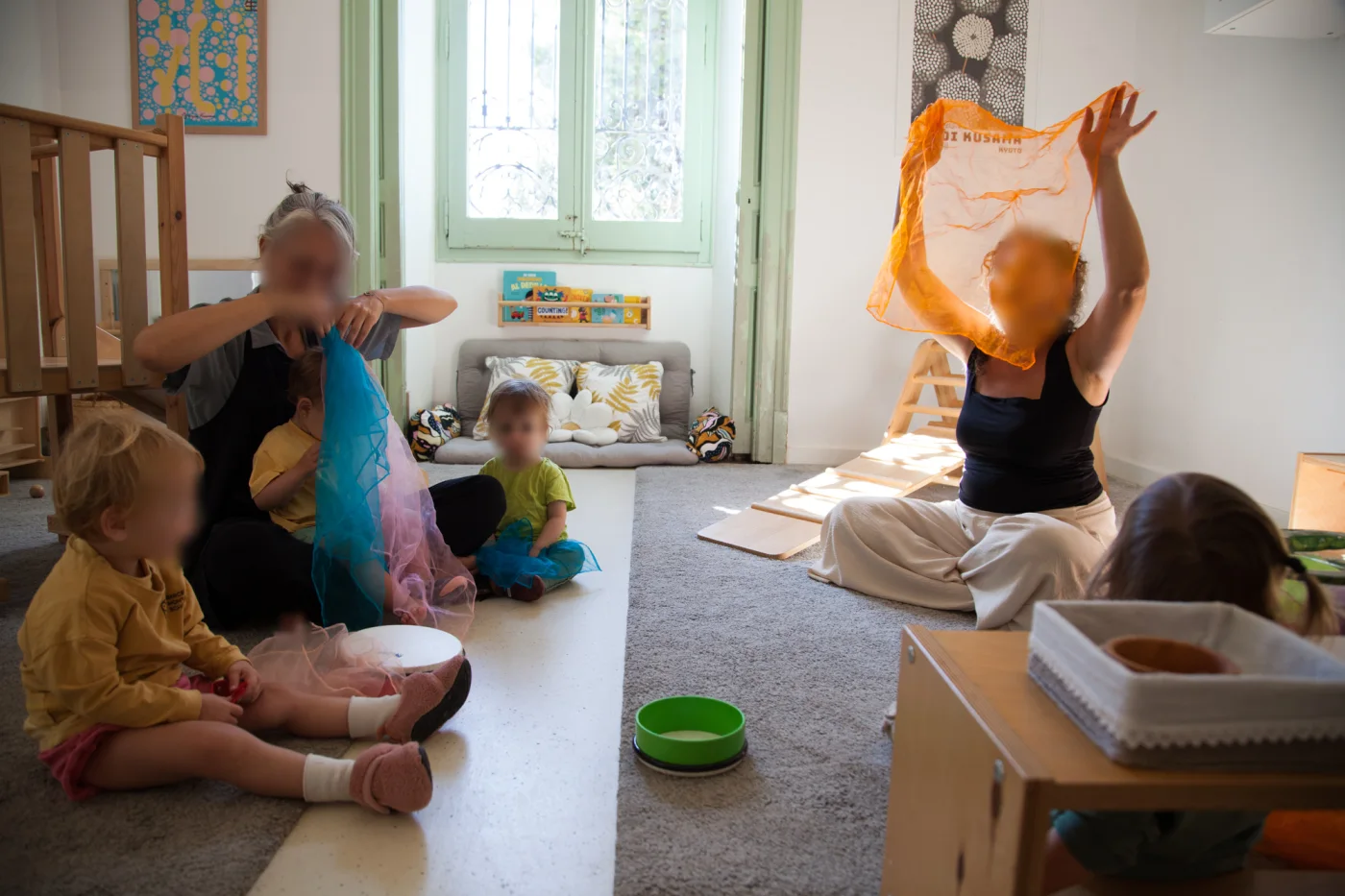
In Bali, children learned to dance by watching, and by their teacher gently moving their arms and fingers into the right shapes. Margaret and Gregory were among the first scientists to use photographs and films to show how children learn from the people around them.
Let’s talk together
What have you learned just by watching someone else?
If you had a camera for one day, what would you photograph to show how we live?
One big human family.
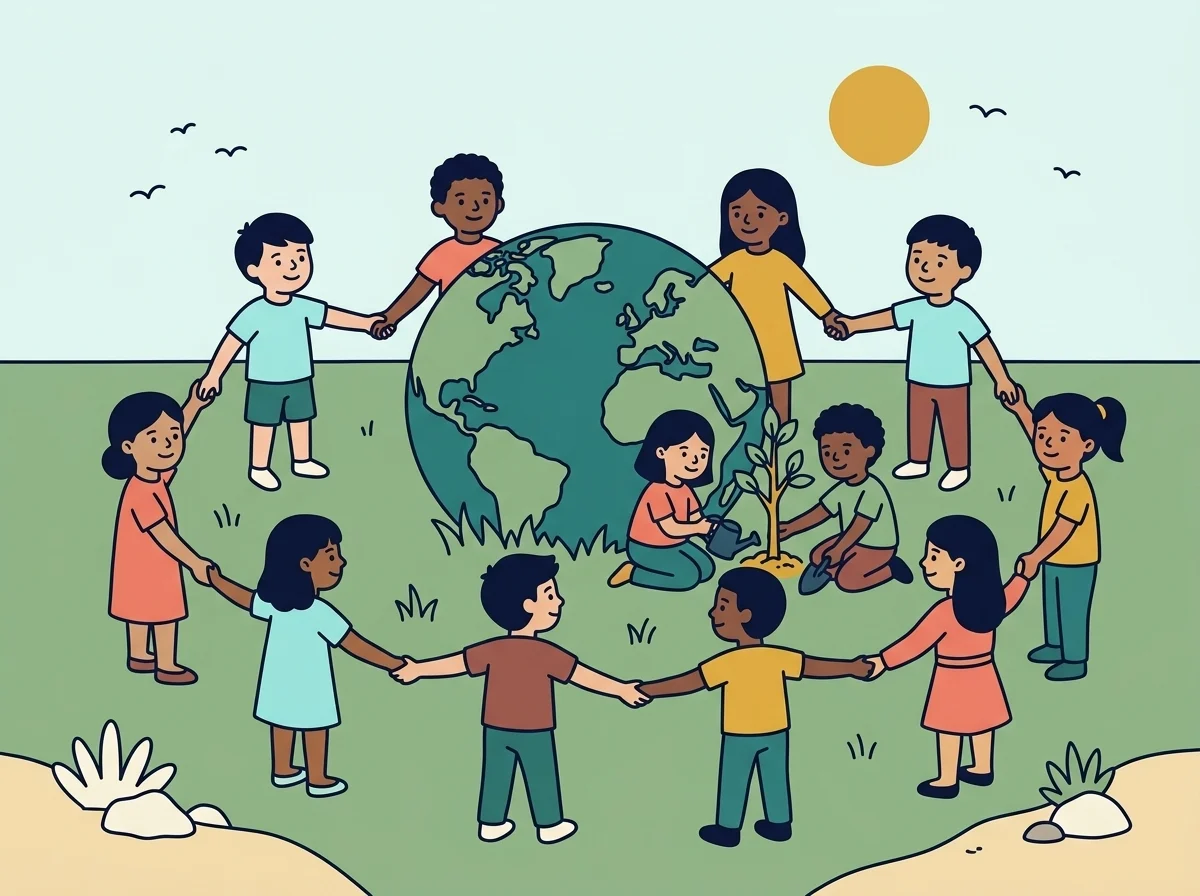
After all her journeys, Margaret understood something very important: there is not just one right way to live.
People everywhere ask the same big questions. How do we look after babies? How do we share our food? How do we celebrate, and how do we make up after a quarrel? Every culture has found its own answers.
Learning about other cultures is a bit like looking in a mirror. We start to see our own habits more clearly, and we discover that we can choose to change the things that are not fair or kind.
Margaret lived through two world wars. She believed that people from different countries could learn to understand one another, and that ordinary people working together can make the world better. You do not have to be a king or a president to change things.
These words are often remembered as Margaret’s:
“Never doubt that a small group of thoughtful, committed citizens can change the world; indeed, it’s the only thing that ever has.”Words often attributed to Margaret Mead
A small group of thoughtful people… just like a class! Every class that learns to listen, to share and to welcome everyone is already changing the world a little bit.
Let’s talk together
What could our family, or our class, change together?
What could we learn from a friend who comes from another country?
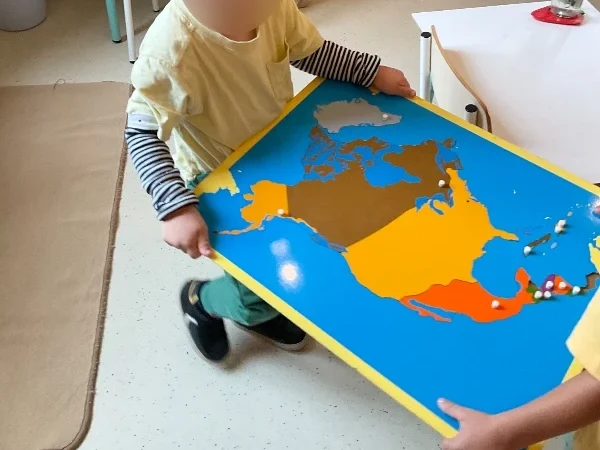
The whole world in our classroom
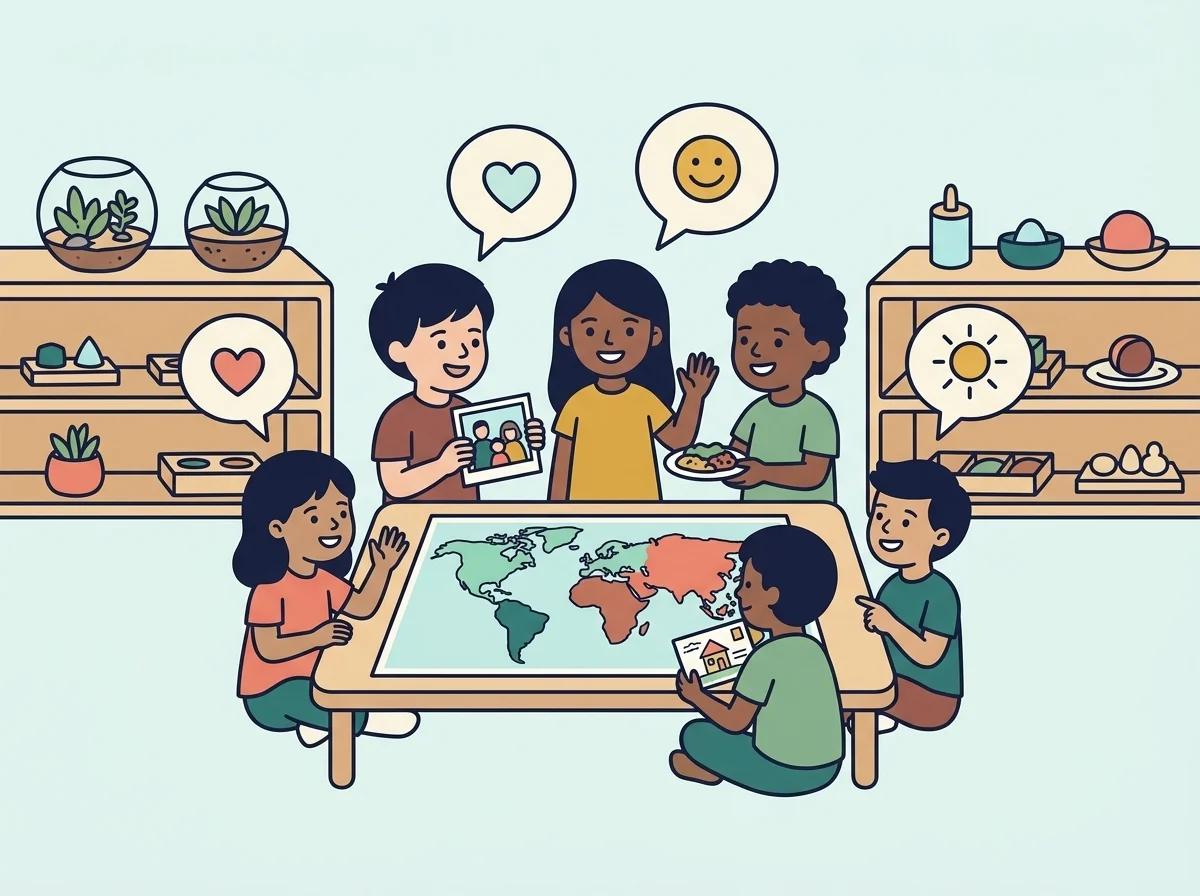
Margaret’s ideas live on wherever children from different places learn side by side, and in our school too.
At BMS, our families come from many different countries. Children hear different languages in the playground, taste food from other kitchens and celebrate one another’s festivals.
In Montessori classrooms, children study the peoples of the world: how they build their homes, what they eat and what they wear. They discover that all humans share the same fundamental needs, and that each culture meets them in its own beautiful way.
Every time we ask a friend, “How do you do it in your family?”, we become a little bit like Margaret.
Try it at home
- Interview a grandparent: what games did they play when they were your age?
- Cook a family recipe together, then try one from a friend’s country.
- Learn to say “hello” and “thank you” in a new language.
- Keep a family noticing notebook: write or draw one thing you noticed each day.
Let’s talk together
Which country would you like to learn more about?
What is something special about your family that you could share at school?
The lady with the walking stick
In 1939 Margaret had a baby girl called Mary Catherine. Margaret watched her grow with the same loving curiosity she had shown to children all over the world. When Catherine grew up, she became a writer and an anthropologist too.
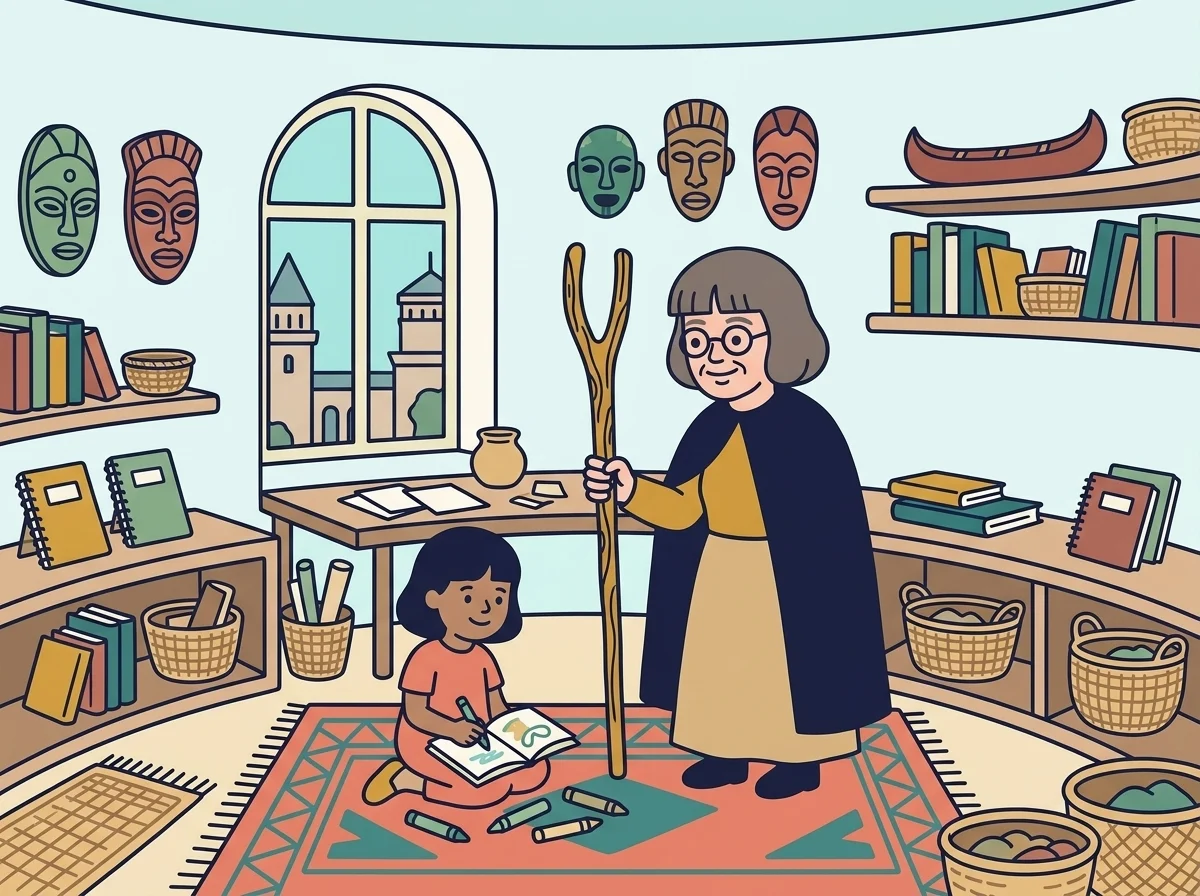
For more than fifty years, Margaret worked at the American Museum of Natural History in New York. Her office was in a little tower at the top of the museum, full of books, notebooks and treasures from her travels.
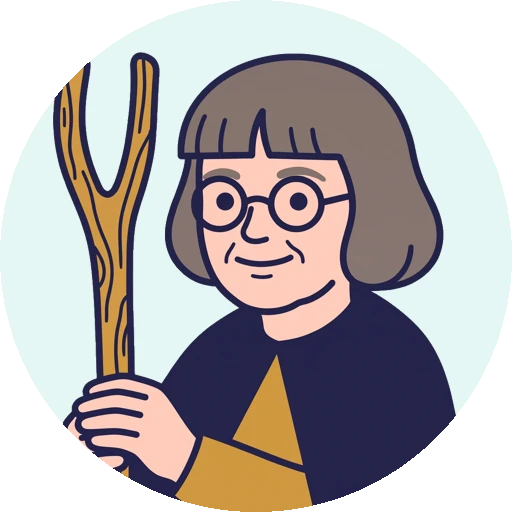
Margaret became famous all over America. She wrote for magazines, spoke on the radio and on television, and answered questions from parents, students and politicians. People recognised her at once: a small woman in a long cape, with a tall walking stick shaped like a fork at the top.
Let’s talk together
If you could have an office anywhere, where would it be?
Which treasures would you keep in it?
A message for you
Margaret kept on working, travelling and writing until she was very old. She even went back to Manus several times to visit the children she had met there, who now had children of their own.
On the 15th of November 1978, Margaret died in New York. Two months later, the President of the United States gave her the Presidential Medal of Freedom, one of the highest honours in her country.
In her very first book, Margaret wrote a message for grown-ups that is still important today:
“Children must be taught how to think, not what to think.”Margaret Mead, Coming of Age in Samoa, 1928
Margaret believed that every child can be an explorer. You don’t need a ship or a faraway island. You can start with the people right next to you.
Let’s talk together
What does it mean to think for yourself?
Who would you like to get to know better, and what would you ask them?
The End…
…and the beginning of your own adventure as an explorer of people.
Keep exploring Margaret’s ideas.
If this story has made you curious, these are some of the books Margaret Mead wrote herself:
- Coming of Age in Samoa (1928): her first book, about growing up in Samoa.
- Growing Up in New Guinea (1930): childhood and learning on Manus.
- Sex and Temperament in Three Primitive Societies (1935): the three peoples of the Sepik River.
- Blackberry Winter (1972): her own story of her childhood and early years.
A note for grown-ups: Margaret’s work in Samoa was later questioned by other anthropologists, most famously Derek Freeman in 1983, and the debate continues today. Science grows through this kind of discussion. The words about “a small group of thoughtful, committed citizens” are widely attributed to her, but no one has found where she first said them.
Live Montessori with us
Our Parent Journey, talks and workshops help families bring Montessori ideas home, including curiosity, respect for every culture and peace.